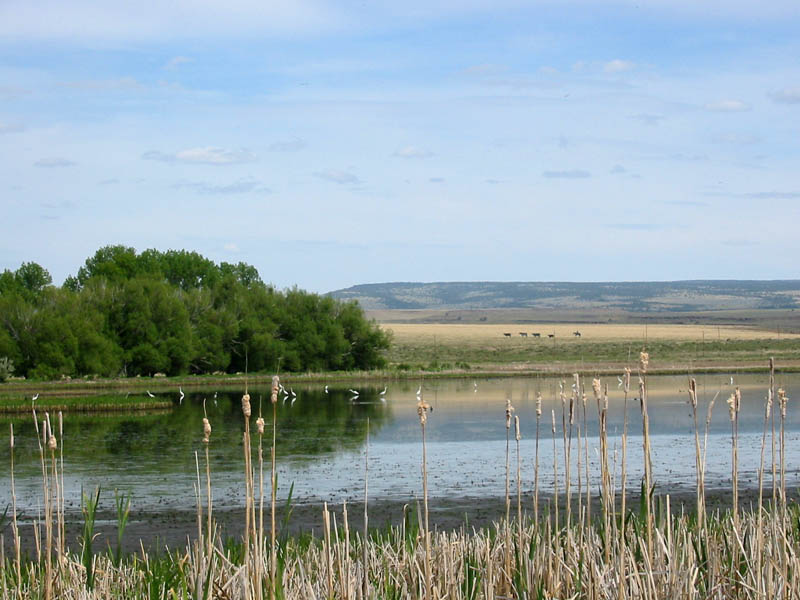
 I just know there's a Sora in there--give me a stone! Benson Pond, Malheur National Wildlife Refuge, Oregon, 26 May 2007 by Greg Gillson.
 "A sharp keek when a stone is thrown into the marsh."
A Field Guide to the Birds. 1960. Roger Tory Peterson.
When Peterson was a young man, the accepted way to watch birds was along the barrel of a
shotgun. Being a good birder a hundred years ago meant being a good shot. One also had to be skillful skinning and preserving the study skins procured. Rather than binoculars and spotting scope, a good birder had to carry a sharp knife and 2 pounds of arsenic to prepare the specimens.
Of course, by 1960 when Peterson was publishing his twenty-seventh impression of his second revised and enlarged edition of his famous field guide, shooting was out, and watching was in.
Thus, the introductory quote above of the voice of Sora, the secretive marsh rail. How many marshes did I fill with stones in my youth--at the suggestion of the greatest bird watcher of all time--hoping to hear a Sora call out?
As we approached the end of the 20th century, however, more thought was being given to the well-being of birds over the perceived "right" to observe birds.
It was about this time that the American Birding Association started up. Its goal was the advancement of birding, which was strongly slanted toward listing and chasing and definitely doing what it took to "get" the bird.
Nevertheless, in recognition of the growing concern for the welfare of birds, they crafted a
code of birding ethics:
"Everyone who enjoys birds and birding must always respect wildlife, its environment, and the rights of others. In any conflict of interest between birds and birders, the welfare of the birds and their environment comes first."
Thus, Peterson's field guide changed with the times:
"When hands are clapped, startled birds utter a sharp keek."
Western Birds. 1990. Roger Tory Peterson.
So there we go. In one generation birding went from blasting birds with a shotgun to applauding.
This emphasis on the welfare of birds was certainly good.
But, sadly, it didn't end there.
In recent years there has been a growing theme in the various birding listservs and blogs. If we truly care about birds, this sentiment reasons, we won't guzzle up fossil fuels to find one out-of-place feathered waif. We won't use tapes for audio playback of a bird's song to get a better view.
We shouldn't even pish!
In fact, if taken to its logical conclusion, if we truly care about birds,
we should stay home and not go out and disturb them by watching them at all!I think this is very faulty reasoning--and not a lot of fun, either.
Bird watching, even if accompanied by occasional fossil-fuel wasting, tape playback and, God forbid,
pishing, creates more people who care about and protect birds and the environment than people who ignore it!
If I gave up bird watching, could I really replace it with an activity that disturbs birds less,
in the long run? What should I do instead of "disturbing" birds by watching them--cruise the streets or hang out at the mall?
I submit that my peculiar habit of watching birds, and occasionally pishing them in for others to view, has caused numerous "non-birders" I encounter to notice birds and the world around them in an appreciative and protective way.
Yes, bird watching may slightly "disturb" some birds. But cutting down the forests, filling wetlands, paving over meadows, and creating shopping malls for people who
don't even know the birds are there, disturbs more birds more greatly than all the tape playback, pishing or, yes, even stone throwing, by all the bird watchers in the world.
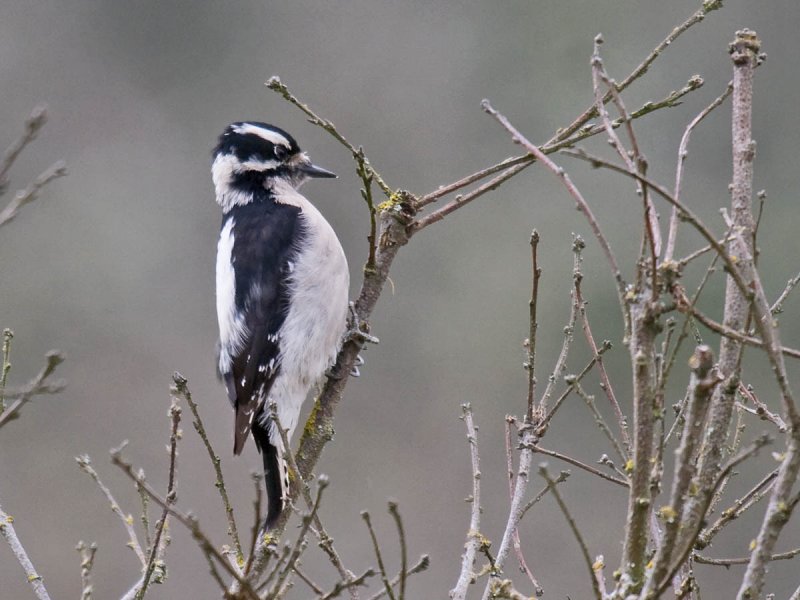 Downy Woodpecker, Cooper Mountain Nature Park, Beaverton, Oregon, 19 March 2011 by Greg Gillson.


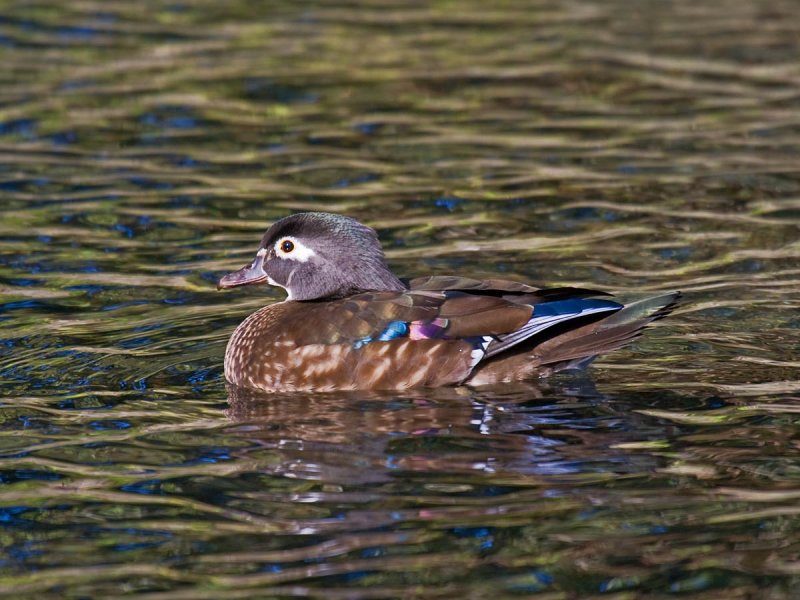 Wood Duck, Portland, Oregon, 19 February 2011 by Greg Gillson.
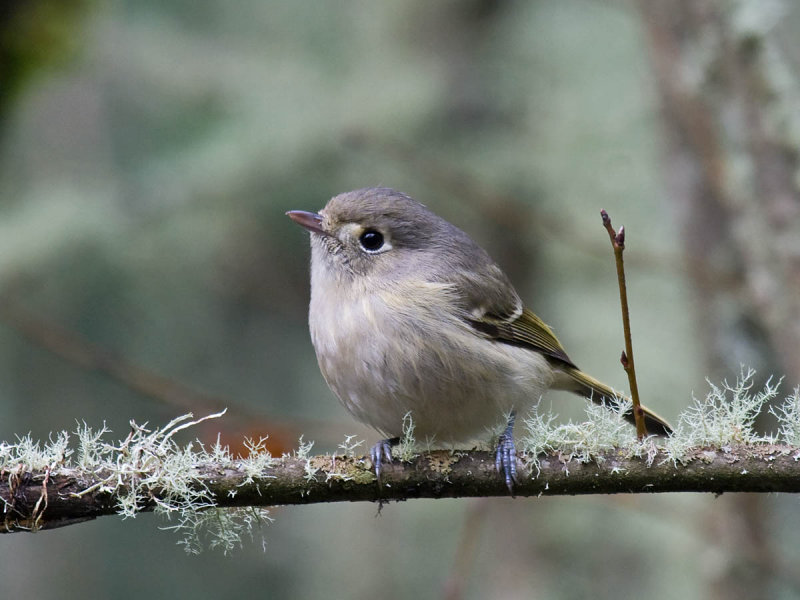 Hutton's Vireo, Cooper Mountain Nature Park, Beaverton, Oregon, 26 January 2011 by Greg Gillson.