Showing posts with label Surfing the web. Show all posts

Friday, July 5, 2013

Inside Birding: ID Videos

The Cornell Lab of Ornithology has a new feature. It is a series of videos for newer birders to learn bird identification.

Presently there are four videos on this page. The four videos are:
  1. Size and Shape
  2. Color Pattern
  3. Behavior
  4. Habitat
These 10-minute videos are really well-done. They accompany the Birding 1, 2, 3 section of the Cornell site teaching how to identify birds. Check these out!

Monday, September 26, 2011

ABA blog: Ten Ways to be a Better Birder

A recent post by Ted Floyd on the ABA blog was quite interesting. Titled "Ten Ways to be a Better Birder," the article makes for some thought-provoking reading.

Some of the things you have no control over. For instance, you can't go back and start birding at a younger age.

But I think that point number 5, on understanding status and distribution, is worthy of a future discussion. So also are points number 2-4, learn vocalizations, understand behavior, and put down your binoculars ("go naked").

Friday, August 12, 2011

Photography tip

Here's a great bird photography tip by Bill Schmoker on the ABA blog. Get low: A matter of perspective

Wednesday, June 8, 2011

Bird songs and calls

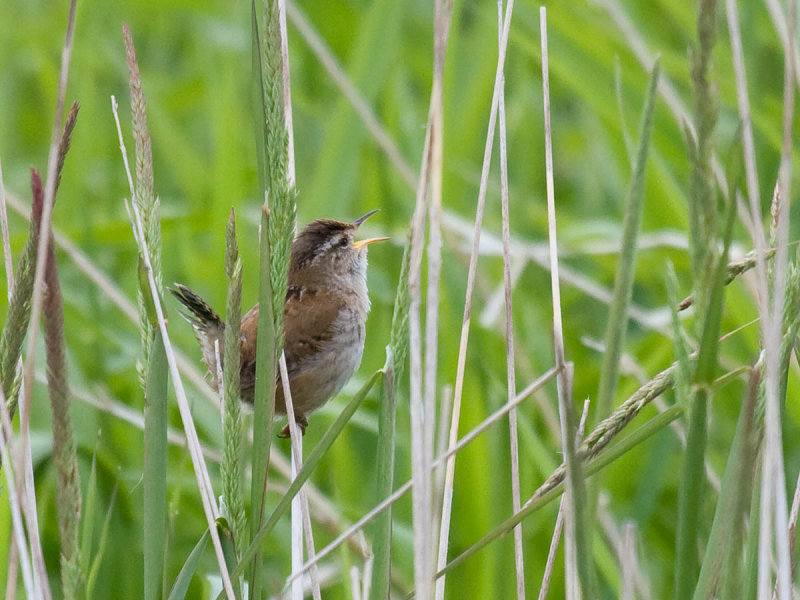
Marsh WrenSinging Marsh Wren, Forest Grove, Oregon 2 June 2011 by Greg Gillson.


Listen. Do you hear it?

No, because this is a photo without sound. But I hear it in my mind.

Here's a link to a sample song of Marsh Wren.

O, what a quiet world this would be without birds! Well, quiet except for human-made sounds. When we think of the sounds of nature, we usually include the calls of birds.

Many birders have trouble identifying bird songs and calls. No wonder; it takes just as much (or more) work than learning to identify birds by sight. And there isn't a workable "field guide" to bird songs and calls.

However, Nathan Pieplow, on the EarBirding blog, wrote this brief guide to
describing what you hear. He writes "How to identify bird sounds in six easy steps." Great stuff.

This gives a framework for describing bird sounds. Even playing a recording of a bird song doesn't help you remember it, if you can't describe it to yourself--if you can't hear it in your own mind when the bird is no longer singing.

Michele, at Northwest Nature Nut recently recorded 50 seconds of audio at the Ridgefield wildlife refuge, in her post:Ridgefield bird songs of May. How many different bird songs and calls can you pick out? I heard 11 species and in the post's comment field recorded the first time I heard each species and the second count of the recording when it calls, so you can compare. Try it!

Monday, March 28, 2011

Best recent birding blog posts

Wilson's SnipeWilson's Snipe, Hines, Oregon, 28 May 2010 by Greg Gillson.


There have been several blog posts by birders lately that I have found extremely interesting. If you haven't read them you should!

Are there really fewer snipe this year than last? Mike Patterson of North Coast Diaries discusses impression versus real data in Sniping about observer bias.

How can birders learn to identify bird songs and calls if they can't even Hear the motorcycle? Don Freiday posts this interesting discussion on the ABA Blog.

Bill Schmoker gives us The Low Down on photographing birds. What an excellent article published on the ABA blog.

A topic close to my heart, David Sibley discusses Identifying small songbirds by flight style.

In the Island Nature blog, Dave Ingram followed up the Progress of Caddisfly Creek, a salmon habitat greenway protected area on Vancouver Island. Yes, indeed, it is well-protected from any salmon!

Over at BirdFellow, Dave Irons writes about taking notes of rare birds on A lost art? Writing descriptions of rare birds.

Thursday, February 3, 2011

Introducing the ABA blog: Where are the ECDs?

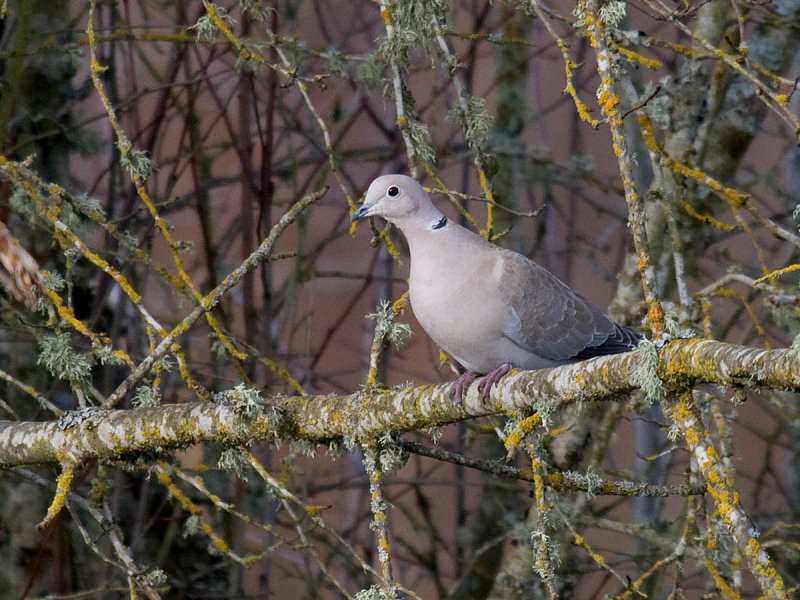
Eurasian Collared-DoveEurasian Collared-Dove, Forest Grove, Oregon, 2 January 2010 by Greg Gillson.


If you haven't seen it yet, you should take a look at the new blog by the American Birding Association. It has multiple authors, but Nate Swick is taking the lead in getting it going. It is at http://blog.aba.org/.

A recent article by Paul Hess asks: 'Where are the Eurasian Collared-Doves?' In a few short years these birds have expanded across the North American continent from Florida westward all the way from Mexico to Alaska, yet they seem slow to fill in the mid-Atlantic, Great Lakes, and New England areas.

The ABA article uses world-wide data from eBird to map the range of Eurasian Collared-Doves.

See my previous articles: What is eBird? and Coming to a backyard near you... Eurasian Collared-Dove.

Wednesday, April 21, 2010

NW Birding blogs

Rufous HummingbirdRufous Hummingbird, Forest Grove, Oregon on 16 April 2010, by Greg Gillson.


It has been 9 months since I last wrote a birding carnival--a peek at the various topics that birding bloggers in the Pacific NW are writing about.

As always, I am especially interested in good photography, interesting topics, and accurate and educational information.

Dave Irons wrote about refractive colors on birds on the BirdFellow blog: When Black is Green: Iridescence on Common Loons

Mike Patterson's North Coast Diaries discusses the migratory races of Ruby-crowned Kinglets passing through right now in: Two kinds of kinglets

On Rich Ditch's Photography Blog, Rich explains how he uses his vehicle as a birding blind in How I did it.

John Rakestraw took us birding in Tillamook Bay, Oregon, in Three Graces Tidal Area. I've only known those rocks as "Harlequin Duck Rocks."

Lee Rentz takes us exploring in the Bodie Hills of California. No birds, but great scenic photography of a little-known place in his post titled: Shhhh … Don’t tell anyone about this leaked federal document!.

The Northwest Nature Nut takes us Down the Garden Path at Bishop's Close Gardens.

The Backyard Bird Shop discusses The Hazards of Migration and what we can do about it in our own backyards.

The Portland Oregon Backyard Birds blog visited Commonwealth Park in Beaverton.

John E. Riutta reviews the new iBird Yard, the digital field guide for the iPad.

In an inexplicable range expansion east of Portland, Andy Frank photographed the first Multnomah County, Oregon Wrentit.

Another County Birding Record, Charles Swift photographed a Latah Co. Long-billed Curlew near Moscow, Idaho on his BirdaPalousa Blog.

Spring has arrived in Seattle, and the Nature Geek Northwest (aka Fiona) photographed some spring flowers. And I even recognize some of them! Her post is Now blooming in Oak Bay Native Plant Garden.

Robert Mortenson, the Idaho Birder, gives us some Swainson's Hawk ID tips.

Bill Schiess' Wild in Idaho gives a personal look at a bird I've never seen, in his post Sharp-tailed Grouse are at it again.

Rhett is Bound to Bird with American Bitterns as his target species at Ridgefield NWR, Washington in his post Sunshine and Life Birds.

Up in Vancouver, British Columbia, the White-crowned Sparrows have arrived and Rick Wright of Aimophila Adventures blogs about their songs.

Wednesday, July 22, 2009

Nesting birds

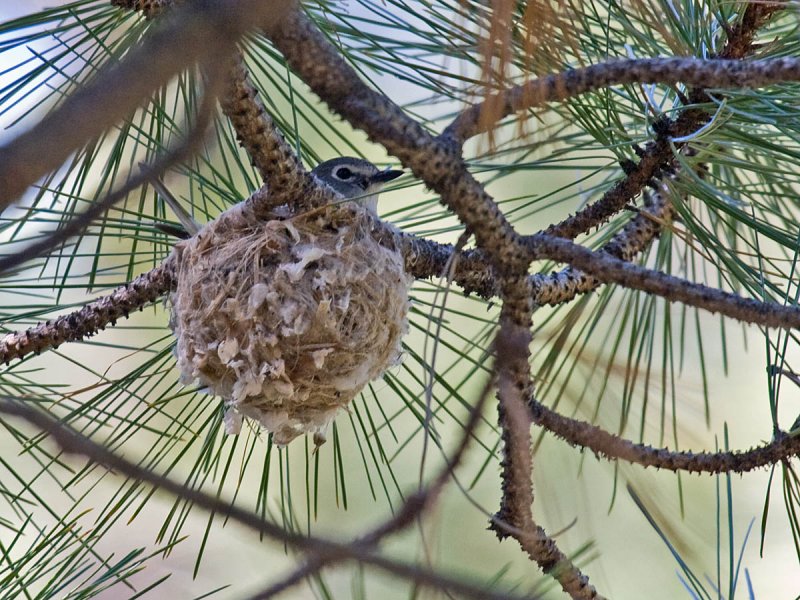
Cassin's VireoCassin's Vireo on nest, Idlewild Campground, Harney Co., Oregon on 26 May 2009 by Greg Gillson.


Vireos often sing from their nests. I followed this singing Cassin's Vireo (above) right to its nest. Other Pacific NW bird bloggers have also written recently about nesting birds...

Bill Schiess combines his birding with fishing. He has a photo collection of Eastern Kingbirds at a nest at Henrys Lake, Idaho.

Also in Idaho, as posted on the Avimor Birding Blog there is a post showing the nests of Swainson's Hawk, California Quail, and Cedar Waxwing.

Another Cedar Waxwing nest was found at the Sandy River delta near Portland, as reported on the Laura Goes Birding blog.

Andy Frank posts photos of a Violet-green Swallow at a nest box.

Over at The Flycatcher is a photo of a White-headed Woodpecker outside its nest on a ponderosa pine.

At BirdFellow, Dave Irons offers up a photo essay of Western Kingbirds feeding their young on a typical nest on a power pole.

Tuesday, July 14, 2009

Technology trend is changing the way people watch birds

There is a convergence of technology underway that is fundamentally changing the way many people approach watching birds.

You're seeing the technology right now.

The technology trend is the ubiquitous nature of powerful, yet affordable, digital zoom cameras, combined with free photosharing web sites and blogs.

Of course, photographers have been taking pictures of wild birds since at least 1892. And, a century later, birders were discovering en mass "Digiscoping," holding up an inexpensive point-and-shoot digital camera to the best birding spotting scopes.

The problem has been sharing those photos. With the advent of the Internet and digital photography, it was easier to post photos. Easier. Not necessarily easy. If you spent the time and money you could have your own Internet web page and upload the photos there.

Though the word "blog" had not yet been coined (the word "web log" was first used in 1997 and later shortened) Don Roberson's rare bird photo-journal: Monterey County Rarities is a home-grown blog that began in 1998 and continues to this day.

One of the oldest blogs on birds still running in the Pacific NW is Mike Patterson's North Coast Diaries. Patterson started his blog in 2004.

Flickr by Yahoo! has free photo-sharing accounts. It allows users to invite others to look at their photos and leave comments.

Google bought Blogger in 2003 and Picasa in 2004. These free programs combine to allow users easily to share photos and text with others.

Now it is easier than ever before for knowledgeable birders, like Roberson and Patterson, to share their high-quality photos and expert knowledge to help teach others about birds and bird watching. This is certainly a welcome advance in bird watching.

But this is not the trend that is changing the way many people are watching birds.

The New Paradigm

Rather, these digital photography and blog technologies are causing new birders to approach birding in a different way. In the past, a beginning birder would spend time observing birds with binoculars and notepad, then research it in their field guides. They may or may not come to a conclusion about its identity. And if they didn't, the bird was gone and the opportunity lost, except for their written description in their field notebook. If they could accurately describe the bird, then, perhaps, a more experienced birding mentor could help them come to an accurate ID. Keen observation skills in the field were required, along with the ability to describe bird anatomy and, perhaps, crude bird sketching skills.

Now, however, what is clear is that many new bird watchers--for the first time ever--are approaching birding from the photograph first, post on the Internet now, identify later point of view.
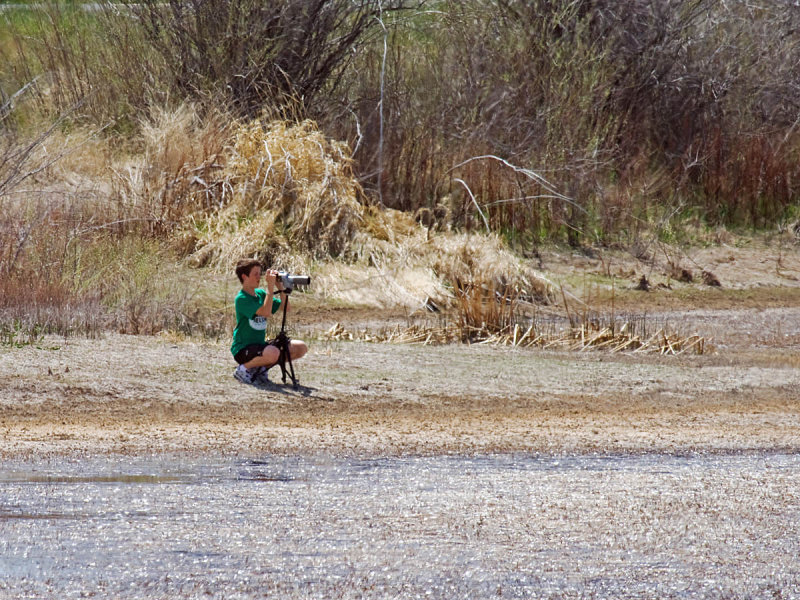
Young birderA young birder practices digiscoping birds at Riley Pond, Oregon on 23 May 2009 by Greg Gillson.


Because of this fundamental change to photographing birds even before attempting an identification, Gunnar Engblom in March 2009 went so far as to make the controversial recommendation of buying young or newer birders a digital camera rather than binoculars!

Does this new paradigm cause new birders to overly rely on others to identify birds for them? Will this keep them from ever developing the keen observation skills necessary to become a competent birder? Or, conversely, could the immediate feedback and ability to get a correct identification from experts anywhere in the world actually help a new birder gain more confidence in their identification skills? Could the extra time needed to get the photograph mean more time spent observing the bird and its behavior? And could the post-processing time on the computer to make the photo ready for publication lead to more study of an actual bird's plumage and structure?

Whether you think this is the "correct" way to learn bird identification skills or not, it is clear that a photograph first, identify later, trend is sweeping the birding landscape. A year or two ago a few requests for photo ID help would appear from time to time on the various bird mailing listservs. "If I email my photo of this strange bird to someone, will you help me to identify it?" Now, however, it is not unusual to have several requests per day on the more active birding email lists. "See my new photos," "Photo ID help requested," and "Blog updated" are frequent subjects of email list postings, directing readers to their blog or photo sharing page to view and, more often than not, help out with a bird identification puzzle.

To close this discussion, I'd like to point to you to Samuel Snook's Nature blog. Snook is, as he says: "a 12 year old boy who takes birding very seriously." Read his May 18, 2009 article: Nature: Point Pelee National Park. And I mean read this. Samuel does use one of his photos (and memory of the bird's song) to get help to identify one new bird; then he immediately goes out to find another. At the end of his blog post he thanks his parents for spending time and money to encourage his birding hobby. Any parent would be proud.

Is this the future of birding?

Friday, July 3, 2009

What are they blogging about this week?

In the right hand column of this blog is a gadget that is entitled "My Blog List." It includes what I think are the best blogs that complement the Pacific NW Backyard Birder. They are consistently informative, well-written, and tend to have exceptional photographs.

For instance...
John Rakestraw takes us to Finley NWR at Corvallis, Oregon, where he shows us Savannah Sparrow, Northern Harrier, and elk, along with a view of the prairie.

Lee was in the Dosewallips river of the Olympic Peninsula of Washington where he photographed Harlequin Ducks and many other items for the Lee Rentz Photography Weblog.

Dave wrote about the early June Woodpecker Wonderland festival held at Camp Sherman, Oregon, in the BirdFellow blog.

Though Rich lives in Arizona, his bird photography tips are excellent. This week it is way too hot for bird photography, so he presents the unique pattern in the bark of a palm tree on Rich Ditch's Photography Blog.

I thought I would give a brief overview of what other Pacific Northwest nature bloggers are writing about this week, too. I know of the following dozen such blogs. If you have a Pacific NW nature blog (especially bird-related) or know of another, please let me know so that I can include them in a future similar list.

This, then, is a surprise blog carnival. The authors didn't know they were going to be on display! To get started, here is a sampling of recent writings....

Mike Patterson, over at North Coast Diaries writes about Devil's Club.

Connor, writing in his nom de plume as "North West Birds" in the Beaverton Bird Blog spotted two new year birds, Cedar Waxwing and Green Heron and presents a photo of the waxwing, but a "stand-in" photo of Great Blue Heron had to do, as he just couldn't get a photo of the Green Heron!

The Northwest Nature Nut presents a few of her recent photos from the Portland Rose Garden and the Pittock Mansion.

Max visited Haystack Rock at Pacific City, Oregon recently and photographed a mole crab for his Apartment Biology blog.

Entomologist JP wrote in May at Pacific Slope Blog of her writing retreat to Shotpouch Creek west of Corvallis, Oregon, and the interesting plants and animals she found there.

Though her blog is entitled Laura Goes Birding, this week she went canoeing on the Willamette River at Portland.

Floyd photographed a "blond" Red-tailed Hawk in Yamhill County, Oregon and writes about it in The Flycatcher.

Seth and Michelle on Portland Oregon Backyard Birds went to the Oregon coast and saw and photographed a lot of good birds, including thousands of Brown Pelicans.

John, at the Born Again Bird Watcher, shows us a few camera and optics products from the "Wild Birds Unlimited Vendor Mart 2009" in Seattle.

Andy took advantage of the recent very low tides to do some "tidepooling" on the Andy Frank blog.

Over in Idaho, Charles blogs about an American Kestrel on the University of Idaho campus in BirdaPalousa.

Finally, Fiona in Seattle, the self-titled Nature Geek NW, found a Pied-billed Grebe nest with chicks.

Wednesday, June 10, 2009

Trip to Malheur National Wildlife Refuge, Oregon

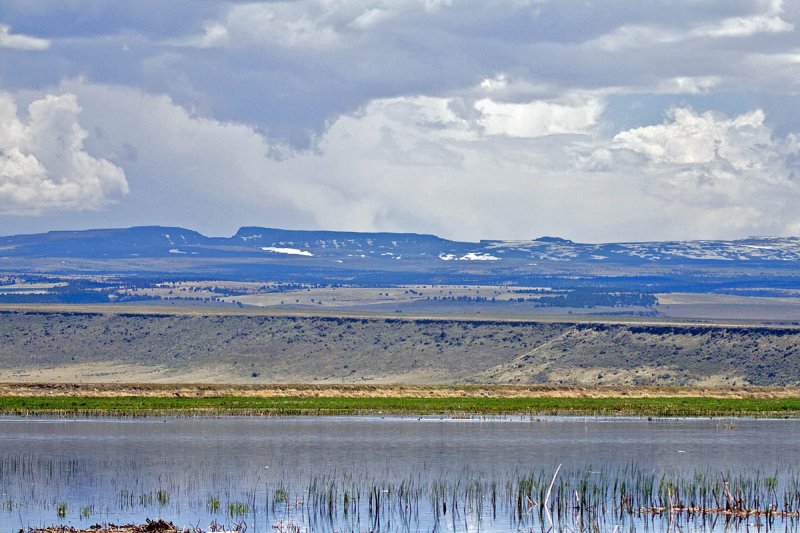
Steens over MalheurThe Steens Mountains rise over Benson Pond and Great Basin desert landscape at Malheur NWR on 25 May 2009 by Greg Gillson.
 

Spring is such a wonderful time for birding. The weather is improving; the sun rising earlier each day. The flowers and leaves are out. Insects buzzing. Birds are migrating through, even ones that winter far to the south and breed far to the north. Local breeders are arriving on territory and singing vigorously.

For birders, spring passes much too quickly. "Next spring I am going to do more birding," you promise yourself.

After not even going to Malheur NWR in extreme SE Oregon last year--an annual birding pilgrimage for most serious birders in the Pacific Northwest--this year worked out quite well for me. I was able to visit Malheur during the traditional Memorial Day holiday and spend 5 days, rather than 3. My wife, Marlene, joined me and we had a relaxed week of birding.


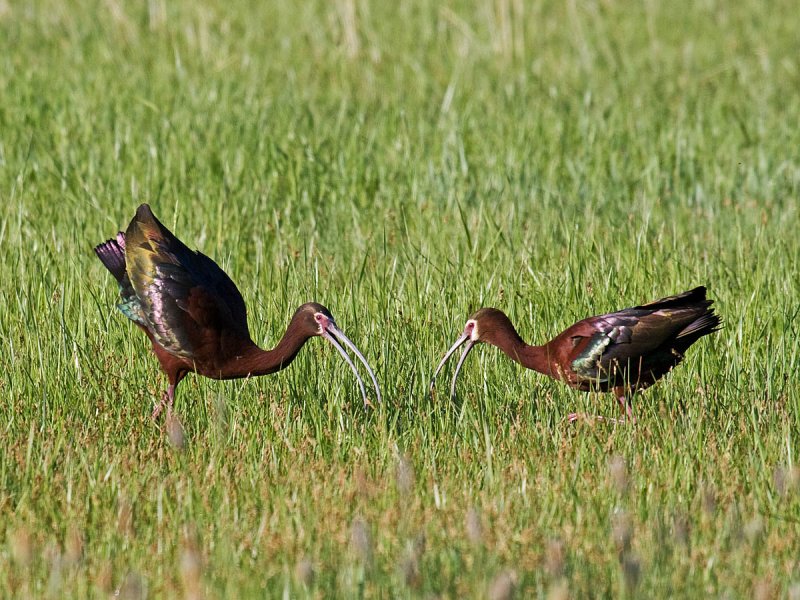
White-faced IbisA pair of courting White-faced Ibis at Hines, Harney Co., Oregon on 24 May 2009 by Greg Gillson.
 

Over the next few weeks I will go through my hundreds of photos from Malheur. I will cull the bad ones and work on the good ones (taken in RAW format for best processing--though not immediately available). As I digitally "develop" more of the photos over the next few weeks, I'll be adding them to my pBase photo archive: Harney County, Oregon, 23-27 May 2009.

In the mean time, you might like to read about other people's visits to Malheur this spring.

Lee Rentz blogged about his April visit in his blog titled: The Old West Lingers on in the Oregon Outback. He continued with Malheur in April, then Dawn on the Sagebrush Plain, and finally Visions of Hell Quenched.

Dave Irons wrote two posts in the BirdFellow blog: Memorial Day Weekend: "Going to Malheur?" and also Memorial Day Weekend Essay.

Mike Patterson blogged in North Coast Diaries a post Malheur in the Morning, then, logically, Malheur in the Afternoon, and followed it up with some non-bird wildlife in Fierce Creatures.

Please enjoy reading these other writings and photos until I am able to post more photos of my own.

Friday, May 15, 2009

Surfing the web... online field guides

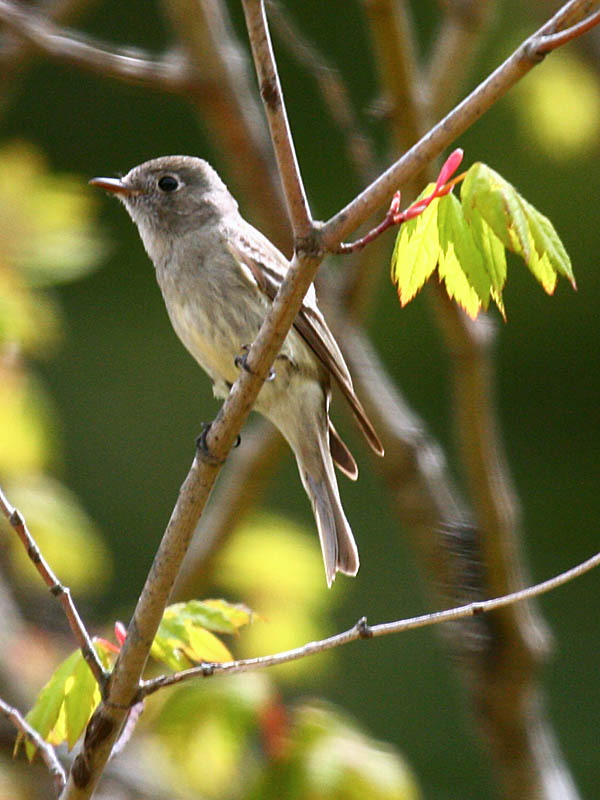
Hammond's FlycatcherHammond's Flycatcher, Timber, Washington Co., Oregon on
18 May 2007 by Greg Gillson.


Online field guides are an incredible resource. Now, whatever field guide you buy for home use, you have others as close as your computer. Here are four covering North American birds.

eNature.com was the first online field guide, covering plants and animals in North America. The bird guide has 1-2 photos of each bird, audio voice recordings, and a written range description.

Sibley.eNature.com is basically a Sibley Guide to Birds online, with several drawings by David Sibley, audio voice recordings, and range map in North America.

WhatBird.com is the online inspiration for the iBird portable field guide application for the iPhone and iPod Touch. This guide has features to aid one to more easily find an unknown bird. There is much information here including a growing archive of photos from users. It displays a range map in North America.

AllAboutBirds.org from the Cornell Lab of Ornithology is clearly trying for the best online field guide. The range map shows both North and South American ranges for birds found in North America. Plus, it links to actual sightings in North America showing density as determined from the eBird data collection application. The site has audio voice recordings and there are over 12,000 bird photos (and growing) on the Flickr BirdShare site. It has a Birding Basics section with tutorials on introductory bird identification and photography.

Tuesday, May 12, 2009

Surfing the web... bird photography

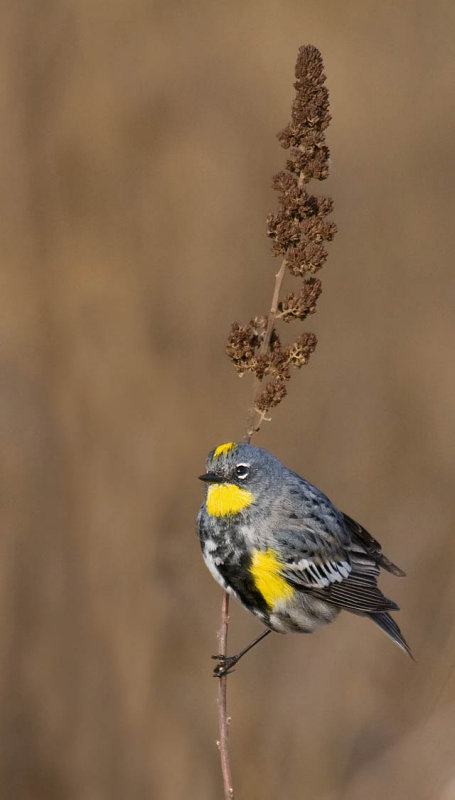
Yellow-rumped (Audubon's) WarblerYellow-rumped (Audubon's)
Warbler, Jackson Bottom
Wetlands, Hillsboro, Oregon on
26 March 2009 by Greg Gillson.


My bird photos have improved measurably over the past few months thanks to suggestions I have put to use using these web sites.

Rich Ditch's Photography Blog: Rich started this great bird photography blog in January 2009 and posts nearly every day. About 80% of his photos are birds, and most of these are taken in locales near his home in Phoenix, Arizona. He describes composition, technique, light--everything that goes into making a good bird photo--and explains his own personal style.

Nature Photographers Online Magazine: My primary interest in this site is the Avian Image Critique Gallery. Here members post bird photos and give and receive helpful criticism on what they like and how to make it better. I especially enjoy "reposts," where a photographer takes the suggestions and re-adjusts his photograph using the recommendations given.

Bird Photographers.Net: This site also has a photo critique site and a monthly eZine, with helpful articles by some of the world's best nature photographers.