Showing posts with label Barn Swallow. Show all posts

Saturday, November 26, 2011

Declining Barn Swallows

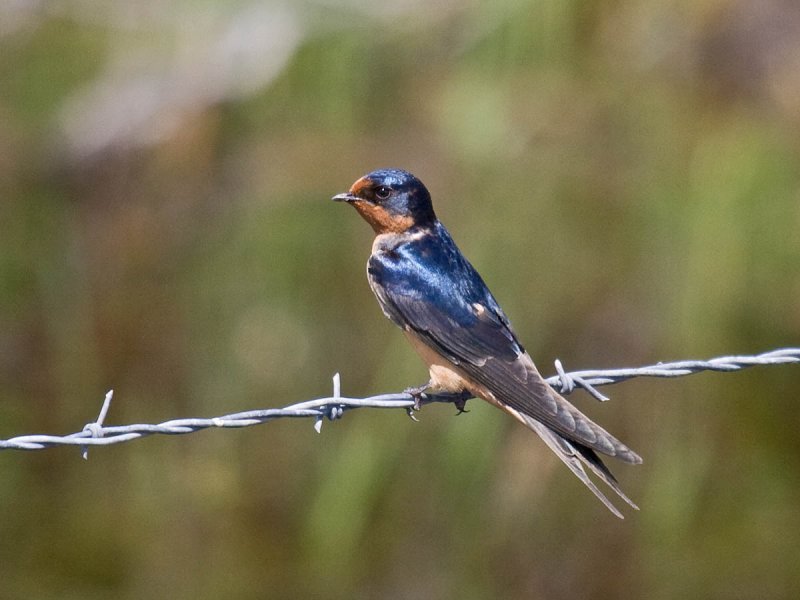
Barn SwallowBarn Swallow, Hillsboro, Oregon, 12 May 2010 by Greg Gillson.


You'd think that the warming climate that is thawing out the northern latitudes would make Canada more desirable to Barn Swallows. Sadly, that doesn't seem to be happening. Instead, the November 2011 issue of Birding magazine has an article explaining that Barn Swallows have been proposed as an endangered bird in Canada.

Barn Swallow frequency on roadside Breeding Bird Surveys in Canada fell 82% from 1966 to 2009. In the US, the population as a whole fell 15% during the same period. But, as in Canada, the most severe declines were on the East and West coasts. This isn't some far away problem. Right here in the Pacific Northwest, Barn Swallow populations fell 65-75% in Washington, Oregon, and Idaho, from 1966 to 2009.

What does it mean? No one yet knows, but with the proposed listing in Canada it is starting to get attention.

You may find a previous article on Barn Swallows here.

Thursday, July 8, 2010

Jackson Bottom birds: July 2-8, 2010

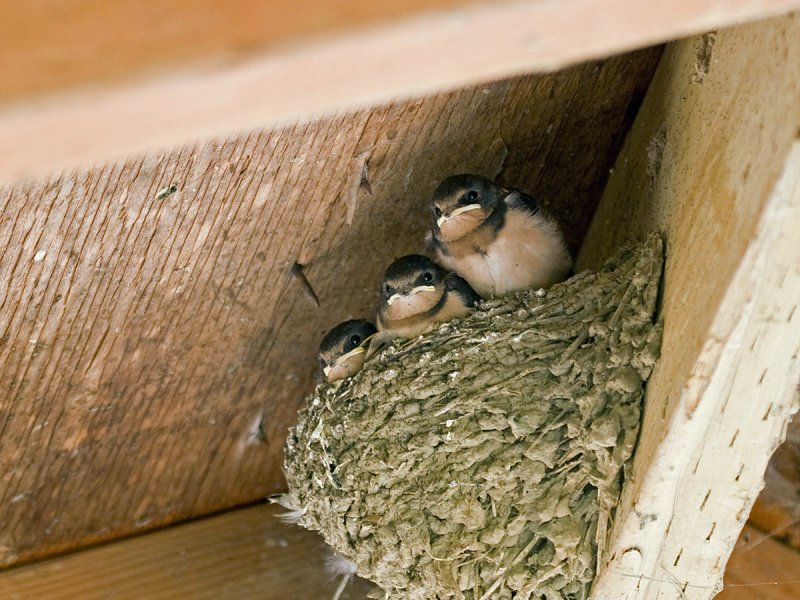
Barn SwallowBarn Swallow chicks at Jackson Bottom Wetlands, Hillsboro, Oregon on 7 July 2010 by Greg Gillson.


It's been a hot week at Jackson Bottom Wetlands Preserve in Hillsboro, Oregon. Water levels are dropping.

Breeding season is in full swing with spotted juvenile AMERICAN ROBINS obvious throughout the riparian areas.

Some signs of fall migration this week included a GREAT EGRET and a couple of LEAST SANDPIPERS.

Otherwise, it has been rather quiet--at least in regard to any new or exciting bird sightings. The best birding is 6-8 am, before most people arrive. In this heat the birds quiet down quickly as the sun rises higher in the sky. As a result, this week's list of reported birds is much shorter than usual.

Canada Goose
Gadwall
Mallard
Cinnamon Teal
Ring-necked Pheasant
Great Blue Heron
Great Egret
Turkey Vulture
Osprey
Bald Eagle
Red-tailed Hawk
Killdeer
Spotted Sandpiper
Least Sandpiper
Mourning Dove
Vaux's Swift
Rufous Hummingbird
Downy Woodpecker
Northern Flicker
Western Wood-Pewee
Western Scrub-Jay
Tree Swallow
Violet-green Swallow
Cliff Swallow
Barn Swallow
Black-capped Chickadee
White-breasted Nuthatch
Bewick's Wren
Marsh Wren
Swainson's Thrush
American Robin
European Starling
Cedar Waxwing
Common Yellowthroat
Spotted Towhee
Savannah Sparrow
Song Sparrow
Black-headed Grosbeak
Red-winged Blackbird
Brown-headed Cowbird
House Finch
Lesser Goldfinch
American Goldfinch
House Sparrow

Monday, May 3, 2010

In the backyard... Barn Swallow

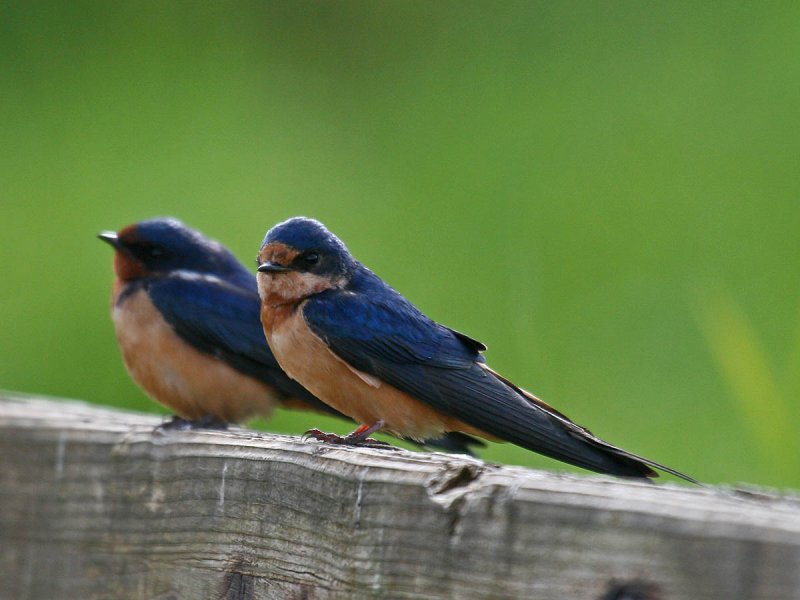
Barn SwallowBarn Swallow, Malheur NWR, Harney Co., Oregon on 24 May 2009 by Greg Gillson.


One swallow does not make a spring.
- Aristotle, 384-322 B.C.

A harbinger of spring, the Barn Swallow is a familiar backyard bird to most people throughout the world. It nests in North America, Europe, and Asia. It spends winter from southern Mexico south through South America, most of sub-Sahara Africa, and from India and SE Asia to northern Australia.

With its metallic blue coloration, long forked tail, and orange breast and belly (white in Europe and Asia), it is immediately recognized by all. It constantly calls as it dives and twists after flying insects, a pleasant twittering kvik-kvik or wit-wit.

The cup-shaped mud nest is placed on a rafter in barn, porch eaves, bridges, or other man-made structure. They lay 4-5 eggs. When the young fledge, the parents immediately begin to nest again. It is not unusual for these birds to raise 3 broods in a season.

Arriving in the Pacific Northwest about the first of April, Barn Swallows remain through the summer. In September they build into huge flocks as they migrate south, often roosting at night in corn fields, where up to one-half a million birds have been estimated such as near Dayton, Oregon. Flocks continue into the first week of October. Individual Barn Swallows have been detected occasionally in winter in recent years, west of the Cascades.