Showing posts with label attracting. Show all posts

Monday, March 14, 2011

Attract birds to your backyard: Part 4: Bird foods

A Purple Finch and Black-headed Grosbeak join two American Goldfinches on this huge feeder at Hagg Lake, Washington County, Oregon, 7 July 2007 by Greg Gillson.


In the previous post we discussed bird feeder styles. Certain birds prefer certain styles of feeder types. Equally important is what you put in the feeders to offer to the birds in your backyard. That is the subject of this post.

Black oil sunflower seeds
Birds attracted: finches, grosbeaks, sparrows, chickadees, nuthatches
Feeder styles: platform, tube, hopper

Perhaps you noticed that the photos of birds eating at seed feeders in the previous post were all shown with one type of seed--black oil sunflower. Sunflower seeds come in two general varieties--striped and black oil. The black oil have more nutrition and fats (oils), and the hulls are softer, allowing chickadees and other small birds to break them open to get to the kernels. These seeds are a favorite of many birds species.

Black oil sunflower seed in a tube feeder will greatly reduce the number of invasive House Sparrows at your feeder. Such feeders are also less likely to be taken over by jays and squirrels.


This squirrel-proof tube feeder also keeps out Red-winged Blackbirds and jays, while birds up to the size of Golden-crowned Sparrows go right in!


"Wild bird seed mix"
Birds attracted: sparrows, doves
Feeder styles: platform, hopper

As an inexpensive "filler," these bird seed mixtures are generally over 50% millet (often both the red and white varieties). Millet, especially red millet, is not desired by most native backyard birds. Many sparrows and other birds will kick or throw it out of the bird feeders, searching for other seeds, such as sunflowers. However, the invasive House Sparrows love millet and European Starlings eat it too. Most people would rather feed native birds than encourage the loud, messy, and aggressive House Sparrows and Starlings. Once you realize that the great deal on wild bird seed mix is only 50% edible to the birds you want to attract, you will be more willing to spend slightly more money on other types of food.


Niger seed (also trademarked as Nyjer)
Birds attracted: goldfinches, siskins
Feeder styles: thistle feeder, thistle sock

There is no better way to attract goldfinches to your backyard than a thistle feeder, unless you plant your yard with thistles--something sure to make your neighbors prickly.

Don't feed too much at once, as it can mildew in the rain. Goldfinches may take some time to find your thistle feeders, so first set up black oil sunflower tube feeders to attract other finches and the goldfinches will soon find the thistle feeder.


This smaller thistle feeder looks perfect!


Corn
Birds attracted: quail, doves, jays, blackbirds
Feeder style: platform or spread on the ground

Corn is a favorite of squirrels--especially whole corn on the cob. Cracked corn is eaten by more birds. Some people don't mind attracting squirrels--others try to discourage them from "stealing" all the bird food.


Peanuts
Birds attracted: jays, nuthatches
Feeder style: platform

Jays and squirrels will spend all day burying and digging up each other's cached peanuts. Other birds will eat them, occasionally.


Suet
Birds attracted: woodpeckers, bushtit
Feeder style: Suet cage or nailed on tree

You may be surprised at the number of birds attracted to suet in winter, including insect-eating wrens and warblers. However, don't think of carnivorous birds. Think of suet as a big, fat, juicy grub, and you'll see the appeal.

There are many different "flavors," some including seeds. Experiment with what works best for your birds.

Many types of suet melts or goes rancid quickly once the temperature goes above 60 degrees F, so this is primarily a winter food. However, you may find other certain types that keep better in warm weather.


This copper-roofed suet cage should keep the starlings off!


Fruit
Birds attracted: thrushes, orioles
Feeder style: Platform or nailed down

Cut apples or orange slices may attract certain birds, such as Varied Thrushes in winter and orioles in summer. They may attract yellowjackets, in summer, though.


Nectar
Birds attracted: hummingbirds, orioles
Feeder style: Hummingbird feeder, Oriole feeder

The nectar is 20% sugar solution, 1 part table sugar to 4 parts water. While this may be bad for us, it is perfect for hummingbirds. Never use honey. Oriole feeders are just hummingbird feeders with bigger feeder holes for the oriole's larger bill.

Bread and human food scraps
Attracted: European Starlings, rats

Don't do it!

- - -

Check out the Cornell Lab or Ornithology for more bird feeding tips.

- - -

Part 1

Wednesday, March 2, 2011

Attract birds to your backyard: Part 3: Styles of bird feeders


In Part 1 we discussed making your backyard attractive to birds with natural food and water. In Part 2 we discussed landscaping to create protective shelter and breeding habitat.

Next week we'll discuss the different kinds of bird foods and the birds they attract.

Now, though, we will discuss the different styles of bird feeders.

When you think of a bird feeder, perhaps the type above comes to mind. It is a tube-style seed feeder. They are preferred by finches, such as this Pine Siskin. Finches feed in the trees, so they like these kind of feeders that mimic (to a degree) the type of feeding these birds favor.

Importantly, these feeder discourage (but don't totally eliminate) larger birds, such as jays, Starlings, and House Sparrows, and squirrels. These unwanted feeder visitors are considered pests or just piggy--the jays will gulp down a bunch of food then carry it off to bury it. Then they soon return, emptying your feeder quickly.

Sparrows, including favorites such as towhees and juncos, however, like to feed on the ground or a raised flat surface. For these birds, and others, a tray feeder works best. These can be covered with a roof or uncovered. They can be as simple as this flat stump sprinkled with bird seed that has attracted this Song Sparrow.


My wife and I had success building a tray feeder using an open weave plastic--similar to a placemat--in a wooden frame. We attached this to our cedar fence with shelf brackets. The open weave allowed rain to drain, and keep the seed fresh longer. It detached and washed off easily.

Tray feeders will allow you to offer the birds something besides just seeds (wait until next week for more details of different foods you can offer).

Here is another example of a Black-headed Grosbeak using a very small open mesh metal tray feeder that attaches to a mounting pole:


An adaptation to a tray feeder is a hopper-style feeder. These are covered bins of seed, with a tray at the bottom. Birds pull seeds from the bottom and the tray is refilled automatically. These are more protected from the rain. Here is an example.


A specialized seed feeder is a thistle feeder. Shown below is one made of open wire mesh. These are especially for goldfinches and siskins, though, as you can see below, this female House Finch also joins the Lesser Goldfinch at this thistle feeder.

Another type of thistle feeder is called a thistle sock. The birds pull small seeds (usually niger seed, not thistle) that stick out from an open-weave fabric bag--just like weed seeds sticking out from my socks after walking through a weedy field in late summer. Again, the metal mesh dries out more quickly so the seed does not mildew as quickly in wet climes--and is easily cleaned.


That covers the seed feeders.

Pictured below is a suet feeder, in this case the suet (rendered beef fat) is in a suet cage. Suet is a food that provides protein. Once the temperature rises above 60 degrees F, the suet can spoil quickly, so this is primarily a winter food only.

You will note this suet cage is on a long chain. Doesn't this swing around wildly knocking birds off? Yes, and that is exactly why. European Starlings love suet. If allowed, a small flock will eat the suet block in a few minutes. However, Starlings have very weak feet. They must stand on top of the suet cage and bend over to eat it. This causes a starling merry-go-round! They still get some suet, but often are somewhat deterred.

Other birds, including large flickers, just fly up and hang on to the side of the suet cage to eat.


The final feeder style we will consider is the nectar feeder, perhaps best known as hummingbird feeder, though other birds may drink nectar, too.


Finally, you can buy all of these feeder types with suction cups that will attach these feeders directly to your windows. Smaller birds (chickadees, hummingbirds) easily become accustomed to your presence and will quickly move from a regular feeder to a nearby window feeder.

All feeders need cleaned periodically, or food will spoil, rodents will be attracted, birds may get diseases.

Soap and water works to clean cloudy hummingbird solution (bacteria). A weak bleach solution is needed for black mildew or mold, which can develop in a day in summer heat, or 4 or 5 days in cold weather. The trick is to only fill the feeder with the amount of nectar consumed before going bad. When you purchase a hummingbird feeder, choose one that can be disassmbled completely when cleaning, and buy a small bottle brush, too.

Part 1
Part 4

Wednesday, February 23, 2011

Attract birds to your backyard: Part 2: Shelter and breeding habitat

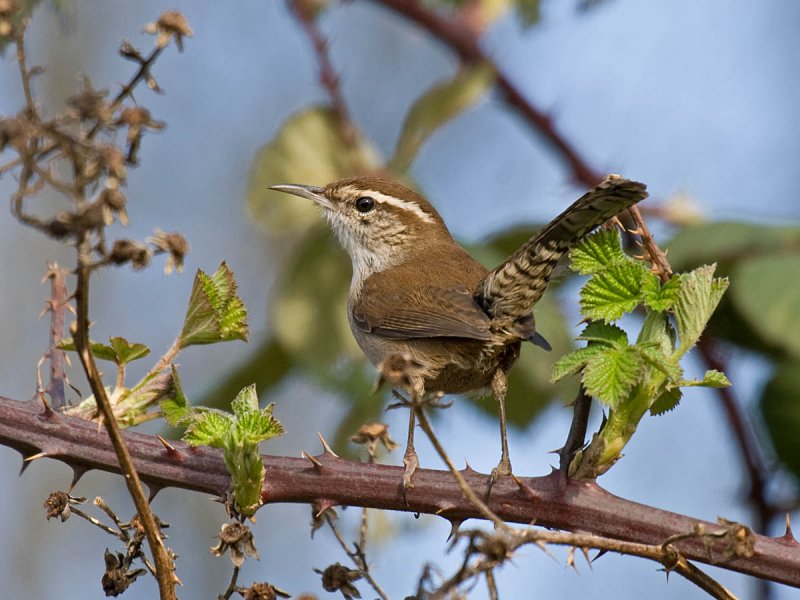
Bewick's WrenBewick's Wren, Hillsboro, Oregon, 4 March 2010 by Greg Gillson.


In Part 1 we discussed that all life needs food, water, and shelter. Specifically, we looked at a bird's need for water and food. In this post we discuss their need for shelter and breeding habitat.

As in real estate, attracting birds is all about 3 things: location, location, location.

Your backyard, even if only an urban deck, is part of your larger neighborhood. The surrounding neighborhood, then, has a direct bearing on the number and types of birds you can expect in your own bakyard.

Thus, if there is an unmanicured woodlot next door, you might expect wrens, such as the Bewick's Wren above, to visit your yard from time to time. They are primarily interested in insects they can find in the brush or low bushes.


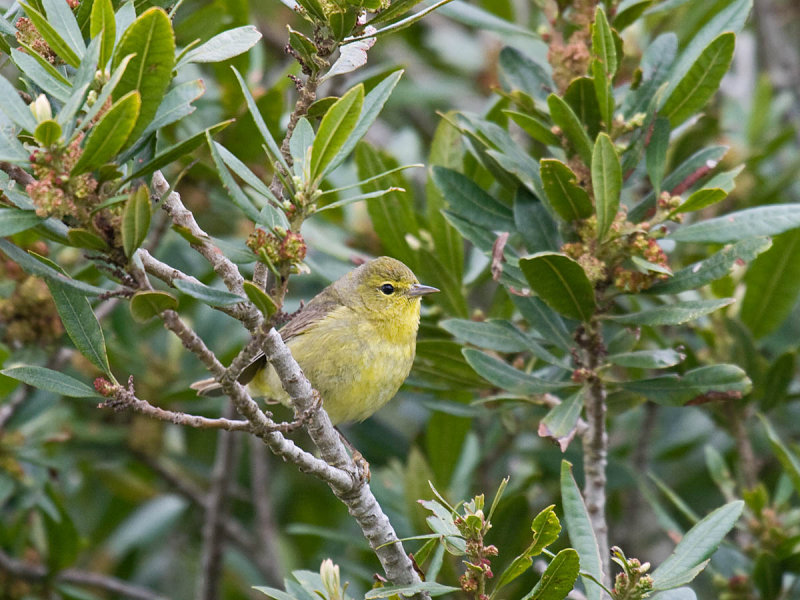
Orange-crowned WarblerA migrant Orange-crowned Warbler hides out in evergreen landscaping, Newport, Oregon, 30 April 2010 by Greg Gillson.


Evergreen shrubs provide shelter all through the year. It gives small birds a place to hide when a cat appears. During migration, your evergreen shrubs may host tired and hungry neotropical migrants, such as warblers, vireos, tanagers, buntings, and others.

If you have trees, you will attract even more birds.


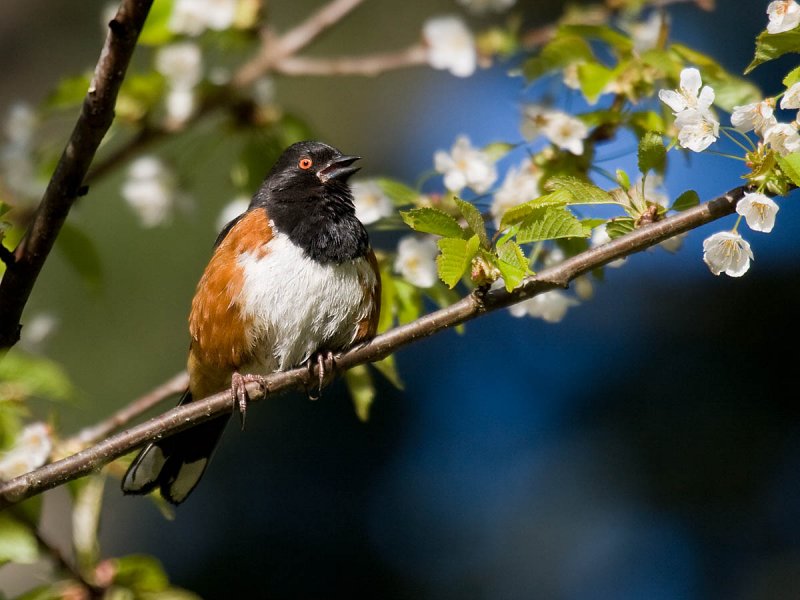
Spotted TowheeA Spotted Towhee sings from a fruit tree, Scoggins Valley Park, Gaston, Oregon, 3 May 2009 by Greg Gillson.


In whatever neighborhood you live, you can attract the most birds by varying your landscaping. More birds are found in "edge" habitat, than in monoculture. Birds will appreciate an area that combines lawn, trees, shrubs, hedges, and gardens.

But what if you live in a simple residential housing area without large trees or mature landscaping? What can you do to make your yard more attractive to birds if you are renting your property and can't make major landscaping changes?

If your yard is mostly lawn, consider planting a central island of shrubs. How about creating planters or container gardens with small bushes, flowers, or vegetables?

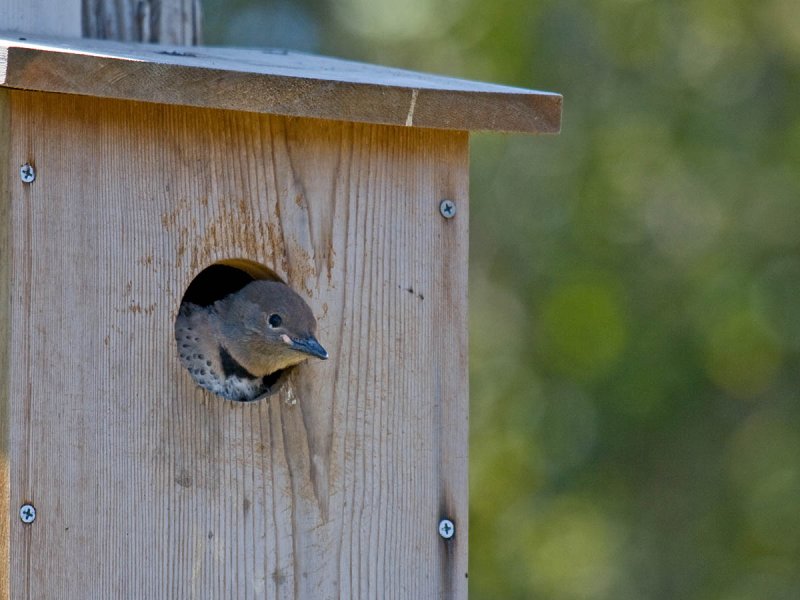
Not everyone can have an old snag in their backyard to attract cavity nesting birds. However, setting up a bird house can accomplish the same purpose.


Northern FlickerA juvenile Northern Flicker peers out of its nest box, Hillsboro, Oregon, 19 July 2010 by Greg Gillson.


Once you have done your best to make your yard attractive to birds with natural food, water, shelter, and breeding habitat, you are ready to set up a bird feeder.

Which foods attract which birds? What options are available as bird feeders, and which are best? We'll discuss these topics in the next two parts of this series.

Part 1
Part 3

Wednesday, February 16, 2011

Attract birds to your backyard: Part 1: Water and food

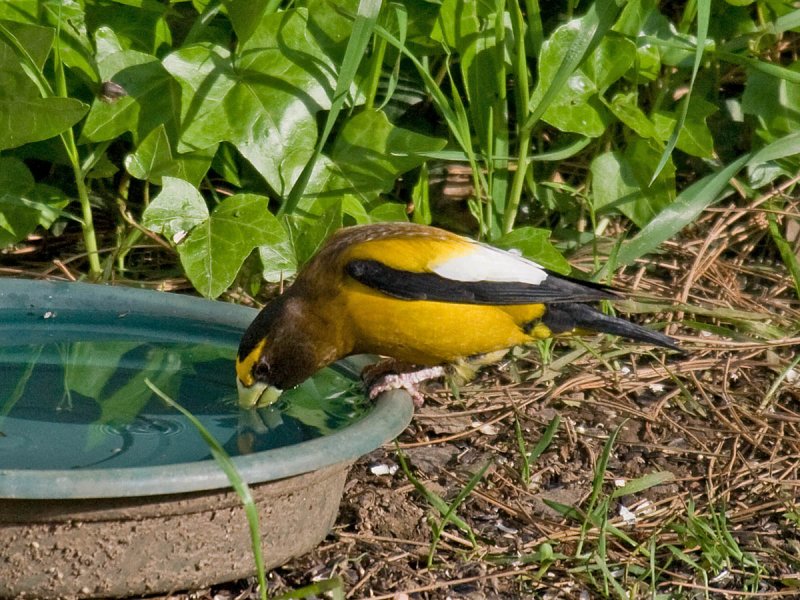
Evening GrosbeakAn Evening Grosbeak takes a drink, Forest Grove, Oregon, 15 May 2009 by Greg Gillson.


As do all living things, birds need food, water, protective shelter, and breeding habitat.

To attract birds to your backyard you must provide life's essentials. The more variety of these things you provide, the more attractive you make your yard.

Of course, you can stick a bird feeder out in your lawn and hope for the best. You certainly may get some birds. However, with a bit of planning, you can get more birds and really enjoy attracting them.

As the Evening Grosbeak in the above photo shows, birds need water. A simple dish on the ground works. This provides water for drinking. But that's not all. Water is also for bathing.

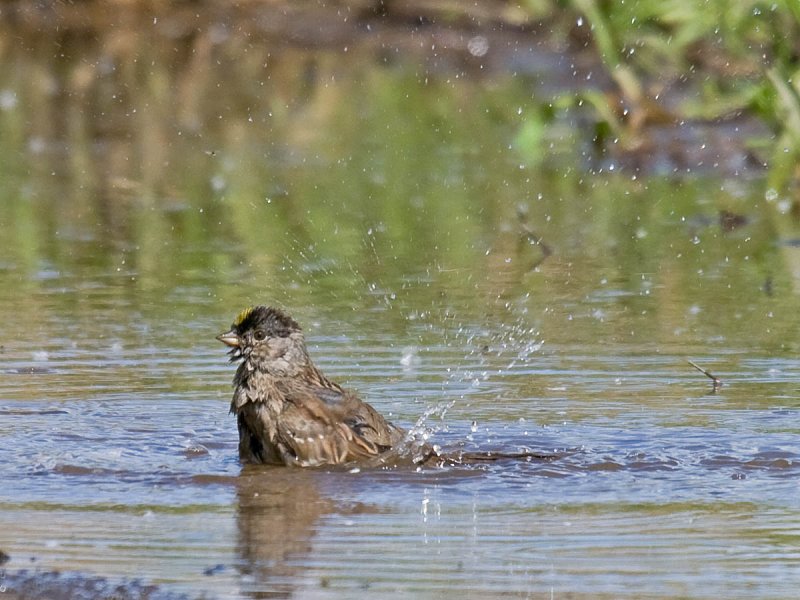
You can get as elaborate as you want, but the birds don't really care, as shown by the Golden-crowned Sparrow in the mud puddle below.


Golden-crowned SparrowA Golden-crowned Sparrow takes a bath, Hillsboro, Oregon, 29 April 2010 by Greg Gillson.


You may purchase a bird bath or make your own. Plastic bird baths are inexpensive--but slippery. You might add rocks for the birds to stand on, if the bottom is too slippery for them. A concrete bird bath provides rough texture so the birds don't slip. Whatever kind you decide upon, keep the water clean.

Remember, during extended freezing weather birds need fresh drinking water more than they need food. Some bird baths have heaters to keep them from freezing in the winter.

Dripping or flowing water is especially attractive for birds. Again, it doesn't have to be a complex fountain and recirculating pool. A 5-gallon bucket with a small hole in the bottom may drip into a shallow pie-tin for several hours. Use your imagination and artistic flair to design something esthetically pleasing.

---

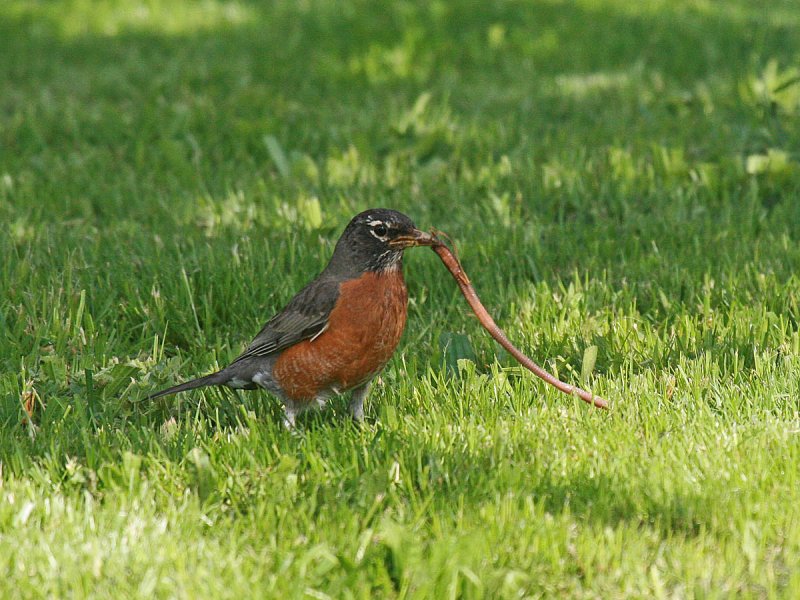
Even in lawn, birds can find some food...


American RobinAn American Robin finds a worm, Hillsboro, Oregon, 11 May 2008 by Greg Gillson.


The more varied the plants in your yard, the more types of birds and the higher numbers of each your yard will support.

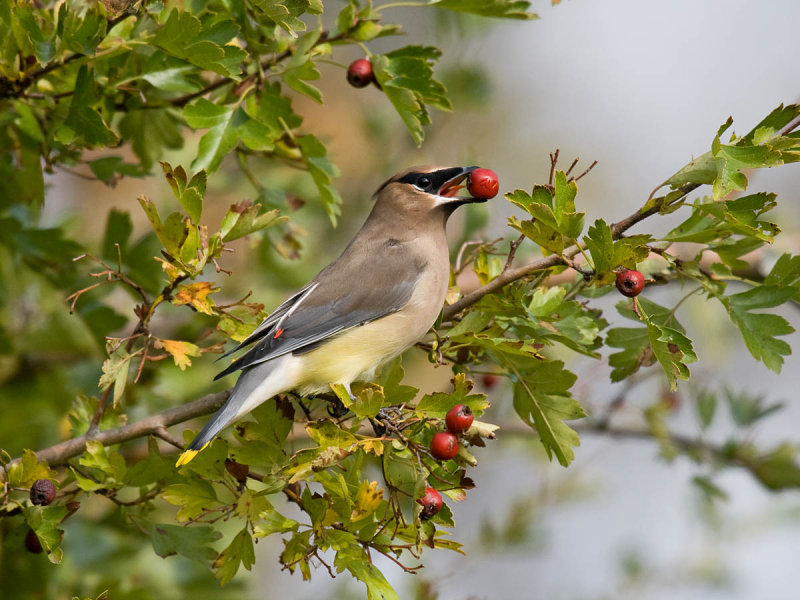
Trees and shrubs can provide food in the form of seeds, flowers, and berries. Such plants also attract insects, caterpillars, and other small animals the birds may eat.


Cedar WaxwingA Cedar Waxwing eats hawthorn berries, Forest Grove, Oregon, 21 October 2010 by Greg Gillson.


In a future post, we'll discuss specific different kinds of food you can feed to birds, and different feeder styles. But next, we'll discuss how your yard can provide two other essential needs of birds: shelter and breeding habitat.

Part 2