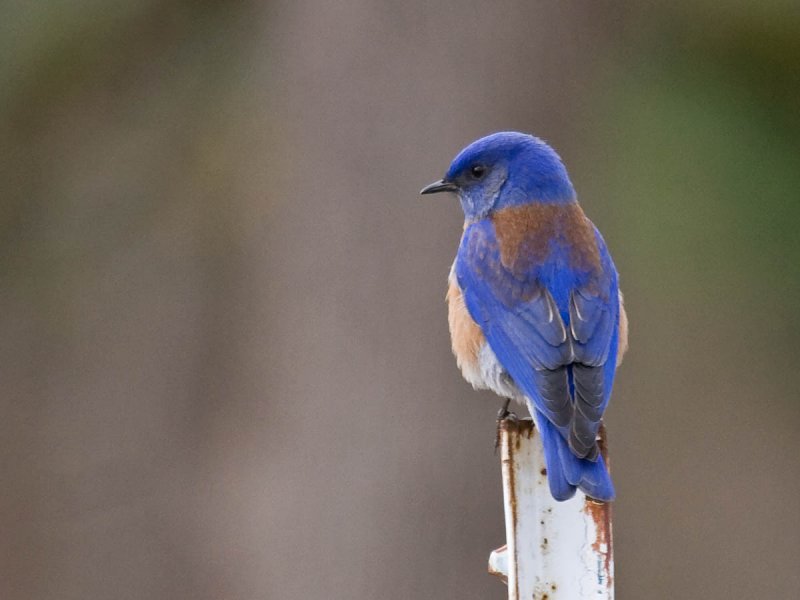
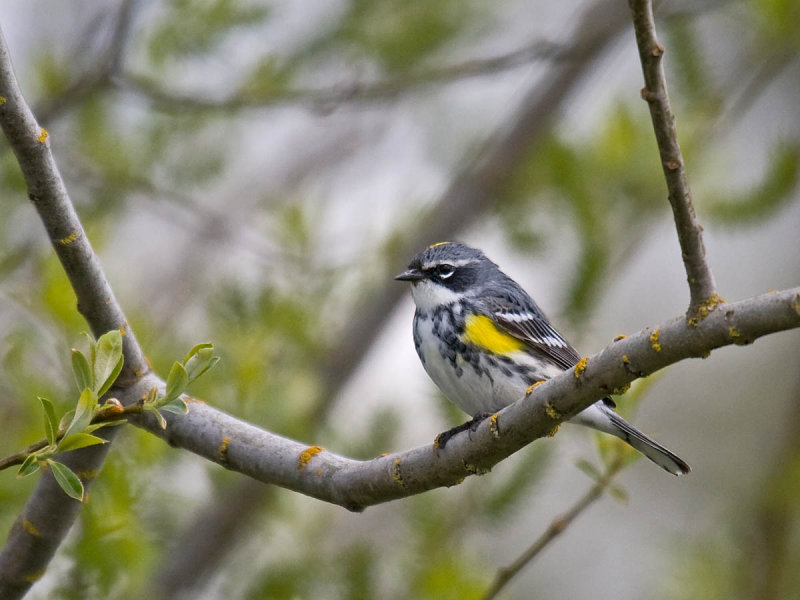
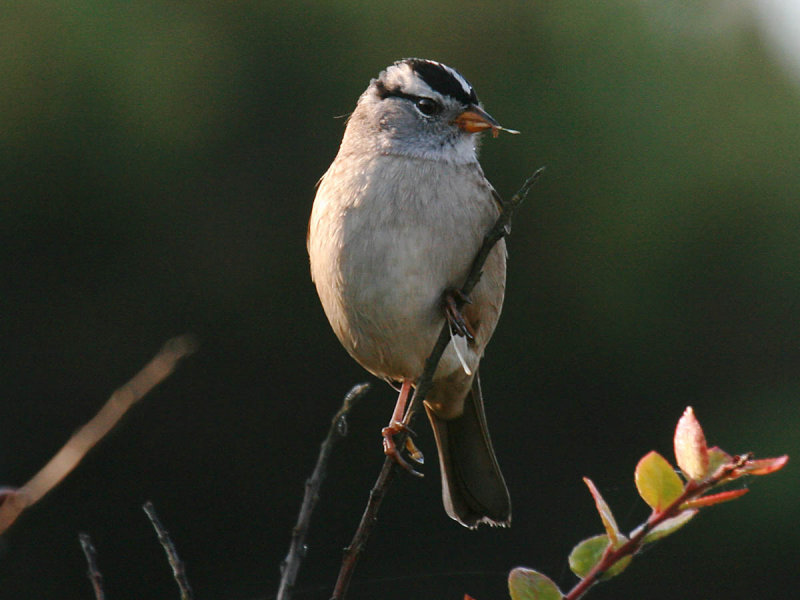
 Puget Sound White-crowned Sparrow, one of 3 subspecies of White-crowned Sparrows in the Pacific NW, and one of 5 subspecies in North America--all easy to tell apart, Newport, Oregon, 15 September 2008 by Greg Gillson.
 "Subspecies have no definite entity, but merely represent subdivisions within the geographic range of a species. They are races, usually determined by morphological characteristics such as slight differences in measurements, shades of color, etc. These subdivisions, generally discernible only by comparison of museum series, are seldom apparent in the field and should not concern the field observer.... No one but an expert comparing specimens would detect the difference. So forget about subspecies."
Roger Tory Peterson
A Field Guide to Western Birds. 1969.
My 1969 Peterson Field Guide is well worn. The pages and binding are barely held together with several types of tape. Every page of that treasured "obsolete" field guide has annotations--new birds added to the North American list, key field marks underlined, changes in bird's names, additional ID pointers and my personal voice descriptions added in the margins.
That field guide is also full of annotations of "lumps" of formerly considered full species into subspecies, as well as "splits" of formerly considered subspecies into full species.
Just paging through, here are some that I recorded or remember....
Pacific Loon split from Arctic Loon
Clark's Grebe split from Western Grebe
Black-vented Shearwater split from Manx Shearwater
Nazca Booby split from Masked Booby
Green Heron lumped with Striated Heron to form Green-backed Heron
Green Heron and Striated Heron split from Green-backed Heron
Bewick's Swan and Whistling Swan lumped into Tundra Swan
Cackling Goose split from Canada Goose
Common Teal lumped with Green-winged Teal (America's only)
Black Scoter split from Common Scoter
White-tailed Kite lumped with Black-shouldered Kite
White-tailed Kite split from Black-shouldered Kite
Harlan's Hawk lumped with Red-tailed Hawk
Blue Grouse split into Sooty Grouse and Dusky Grouse
Lesser Golden Plover split into Pacific Golden-Plover and American Golden-Plover
Wilson's Snipe lumped with Common Snipe
Wilson's Snipe split from Common Snipe
Yellow-footed Gull split from Western Gull
Thayer's Gull split from Herring Gull
Long-billed Murrelet split from Marbled Murrelet
Screech Owl split into Western Screech-Owl and Eastern Screech-Owl
Whip-Poor-Will split into Eastern Whip-Poor-Will and Mexican Whip-Poor-Will
Red-shafted Flicker, Yellow-shafted Flicker, and Gilded Flicker lumped into Common Flicker
Common Flicker split into Northern Flicker and Gilded Flicker
Red-naped Sapsucker and Red-breasted Sapsucker split from Yellow-bellied Sapsucker
Couch's Kingbird split from Tropical Kingbird
Traill's Flycatcher split into Willow Flycatcher and Alder Flycatcher
Western Flycatcher split into Pacific-slope Flycatcher and Cordilleran Flycatcher
Scrub Jay split into Western Scrub-Jay, Florida Scrub-Jay, and Island Scrub-Jay
Plain Titmouse split into Oak Titmouse and Juniper Titmouse
Brown-throated Wren lumped into House Wren
Winter Wren split into Eastern Winter Wren, Pacific Wren, and Eurasian Wren
Bicknell's Thrush split from Gray-cheeked Thrush
Solitary Vireo split into Cassin's Vireo, Blue-headed Vireo, and Plumbeous Vireo
Myrtle Warbler and Audubon's Warbler lumped into Yellow-rumped Warbler
Bullock's Oriole and Baltimore Oriole lumped into Northern Oriole
Northern Oriole split into Baltimore Oriole and Bullock's Oriole
Great-tailed Grackle split from Boat-tailed Grackle
Gray-crowned Rosy Finch, Black Rosy Finch, and Brown-capped Rosy Finch lumped into Rosy-Finch
Rosy-Finch split into Gray-crowned Rosy-Finch, Black Rosy-Finch, and Brown-capped Rosy-Finch
Rufous-sided Towhee split into Spotted Towhee and Eastern Towhee
Brown Towhee split into California Towhee and Canyon Towhee
Oregon Junco, White-winged Junco, Gray-headed Junco, and Slate-colored Junco lumped into Dark-eyed Junco
If subspecies "have no definite entity" and differences "are seldom apparent in the field," then why were 36 of these non-entities turned into full species, complete with
definite field identification characters?
On average, since I began birding in 1972, nearly
one subspecies per year in North America has magically become a species from its former status as a non-entity!
Frankly, there are many more subspecies that will likely become full species in the near future. Splits are likely to come from within Warbling Vireos, Fox Sparrows, Marsh Wrens, Yellow-rumped Warblers (again), Western Scrub-Jays (further), Leach's Storm-Petrels, and more.
So, though I respect what Peterson started, please forgive me if I disobey his advice on this topic and continue to identify
White-crowned Sparrow or
Canada Goose subspecies or
Fox Sparrow groups when I am just as sure of them as I am of Clark's Grebes, Black-vented Shearwaters, Western Scrub-Jays, Red-breasted Sapsuckers, and Spotted Towhees--all former subspecies. [See David Sibley's list of
field identifiable subspecies.]
And please pardon me when I take notice and document subspecific variation in Song Sparrows, Savannah Sparrows, or
Spotted Towhees--even if I can't tell for sure what subspecies they are. After all, such exercises help improve my identification and observational skills.
Peterson would approve of that.
 Birders enjoying spring migration on Mount Tabor, Portland, Oregon, 7 May 2011 by Greg Gillson.
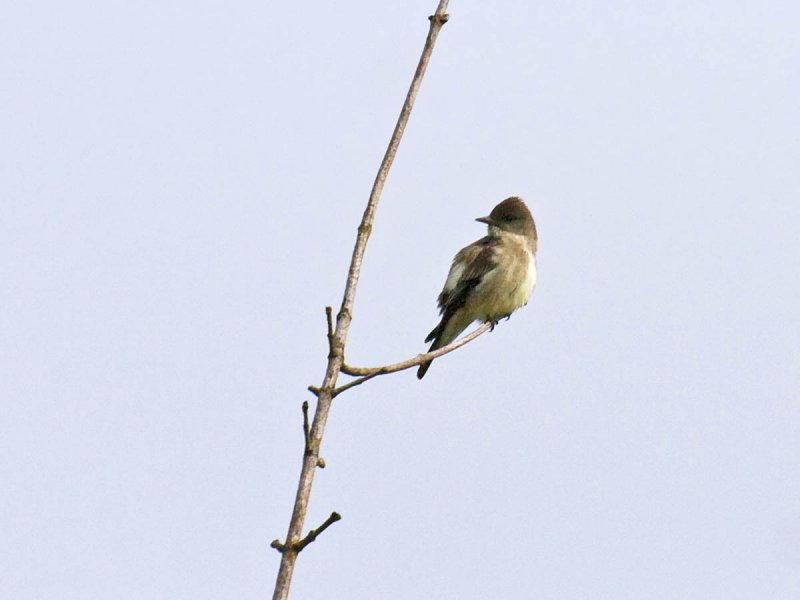 Olive-sided Flycatcher, Mount Tabor, Portland, Oregon, 7 May 2011 by Greg Gillson.
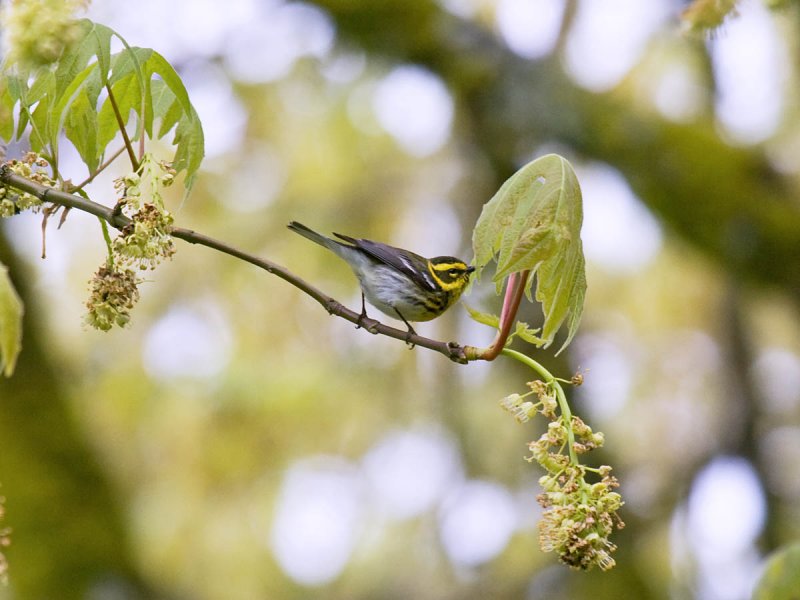 Townsend's Warbler, Mount Tabor, Portland, Oregon, 7 May 2011 by Greg Gillson.