I have kept notes and bird lists of my outings ever since I started birding. At times my notes were prolific and daily. At other times my notes were sparse to non-existent for months or years. Thus, besides entering my recent sightings into eBird the past 2 years since joining, I have gone back to enter older sightings.
Because on my early birding lists I didn't usually record starting time and effort, I had to enter many of these checklists as "incidental." I started birding in November 1972. My first bird lists with enough data to enter into eBird began in 1975. I have now entered all my bird lists from then to mid-1987. This includes the period from August 1979 to December 1984 when I lived in Ventura, California. I am number 12 on the Ventura County all-time birding list, with over 200 complete checklists and 286 species.
I had to be careful, though, that my lists were all from one small area. One can add county lists or even state lists, but these are invalidated from eBird checklists and public output. They would still show up on my personal lists, though. I have decided that if they don't fit neatly in eBird "rules" that I won't enter them. So, some of my traveling lists and big days were not entered unless just individual noteworthy birds on incidental lists not recording all species. So, exact date and exact location.
Of course, I pretty much have forgotten the details of many of these sightings. Thus I am unable to add additional details when eBird flags the sightings as unusual. This has given me an opportunity to get to know the various eBird Reviewers around the country--a topic for a future post!
Saturday, November 17, 2012
Saturday, November 10, 2012
Forest Grove Christmas Bird Count - December 22, 2012
FOR IMMEDIATE RELEASE
Birders of all skill levels sought in Forest Grove, Oregon, on December 22
FOREST GROVE, OREGON (November 10, 2012) - This year’s Forest Grove Christmas Bird Count is Saturday, December 22. You are invited!
The Christmas Bird Count (CBC) is a census of birds in the Western Hemisphere, performed annually in the early Northern-hemisphere winter by volunteer birdwatchers. The purpose is to provide population data for use in science, especially conservation biology, though many people participate for recreation. (Wikipedia)
Although overseen by the National Audubon Society (http://birds.audubon.org/christmas-bird-count), volunteer counters do not have to belong to this organization. It is free to participate.
Forest Grove’s 15 mile diameter count circle includes Hagg Lake in the west, Jackson Bottom Wetlands in the east, Bald Peak in the south, and Roy in the north. Participants are encouraged to spend the whole day afield counting birds, but partial day counters are permitted. They are assigned an area to cover and they do their best to record all the birds seen and heard in their areas, recording bird species and numbers, time spent, and distance traveled by car or walking. Assignments can be in town, farmland, forest, or wetlands, mostly driving in some count areas or mostly walking in other count areas. There is also an opportunity for owl listening in the early morning before sunrise. Feeder watching, for those living within the count circle, is another way to participate—just record the birds coming to your feeder and the time spent actually watching.
Unlike recent years this count isn’t competing for the date with other popular local CBCs. Tillamook’s count is December 15; Sauvie Island’s count is December 29; Portland’s count is January 5. This should allow the count to pull in some experienced birders from nearby areas. But, really, bird watchers of all skill-levels are welcome and desired. Many birders got their first taste of bird watching by attending a Christmas Bird Count. Beginners are paired with more experienced birders—no pressure, this is meant as a fun day of birding.
Meet at Elmers Pancake House (390 SW Adams, Hillsboro) at 7 a.m. (earlier if you wish to order breakfast) to receive your assignment. Spend the day counting birds in a small group. Bring your results back to Elmers about 4:30-5:00 PM. When all are back there is a countdown—a fun, informal count of all species seen. Most participants record 50-70 bird species in their areas. The count as a whole often records 110+ species.
Dress warmly with waterproof hiking boots (or an extra pair of shoes), drive and park carefully, bring a sack lunch. Bring binoculars, spotting scope (if you have one), cell phone for communicating with count compilers to report and learn of any rare birds!
If you wish to get an area pre-assigned contact Greg Gillson, otherwise just show up at Elmer’s at 7:00 a.m. the morning of count day.
Contact (email preferred):
Mary Anne Sohlstrom (503) 463-9540 masohlstrom@msn.com
Greg Gillson greg@thebirdguide.com
Birders of all skill levels sought in Forest Grove, Oregon, on December 22
FOREST GROVE, OREGON (November 10, 2012) - This year’s Forest Grove Christmas Bird Count is Saturday, December 22. You are invited!
The Christmas Bird Count (CBC) is a census of birds in the Western Hemisphere, performed annually in the early Northern-hemisphere winter by volunteer birdwatchers. The purpose is to provide population data for use in science, especially conservation biology, though many people participate for recreation. (Wikipedia)
Although overseen by the National Audubon Society (http://birds.audubon.org/christmas-bird-count), volunteer counters do not have to belong to this organization. It is free to participate.
Forest Grove’s 15 mile diameter count circle includes Hagg Lake in the west, Jackson Bottom Wetlands in the east, Bald Peak in the south, and Roy in the north. Participants are encouraged to spend the whole day afield counting birds, but partial day counters are permitted. They are assigned an area to cover and they do their best to record all the birds seen and heard in their areas, recording bird species and numbers, time spent, and distance traveled by car or walking. Assignments can be in town, farmland, forest, or wetlands, mostly driving in some count areas or mostly walking in other count areas. There is also an opportunity for owl listening in the early morning before sunrise. Feeder watching, for those living within the count circle, is another way to participate—just record the birds coming to your feeder and the time spent actually watching.
Unlike recent years this count isn’t competing for the date with other popular local CBCs. Tillamook’s count is December 15; Sauvie Island’s count is December 29; Portland’s count is January 5. This should allow the count to pull in some experienced birders from nearby areas. But, really, bird watchers of all skill-levels are welcome and desired. Many birders got their first taste of bird watching by attending a Christmas Bird Count. Beginners are paired with more experienced birders—no pressure, this is meant as a fun day of birding.
Meet at Elmers Pancake House (390 SW Adams, Hillsboro) at 7 a.m. (earlier if you wish to order breakfast) to receive your assignment. Spend the day counting birds in a small group. Bring your results back to Elmers about 4:30-5:00 PM. When all are back there is a countdown—a fun, informal count of all species seen. Most participants record 50-70 bird species in their areas. The count as a whole often records 110+ species.
Dress warmly with waterproof hiking boots (or an extra pair of shoes), drive and park carefully, bring a sack lunch. Bring binoculars, spotting scope (if you have one), cell phone for communicating with count compilers to report and learn of any rare birds!
If you wish to get an area pre-assigned contact Greg Gillson, otherwise just show up at Elmer’s at 7:00 a.m. the morning of count day.
Contact (email preferred):
Mary Anne Sohlstrom (503) 463-9540 masohlstrom@msn.com
Greg Gillson greg@thebirdguide.com


Saturday, November 3, 2012
Field-friendly bird sequence
Flycatcher-like Birds
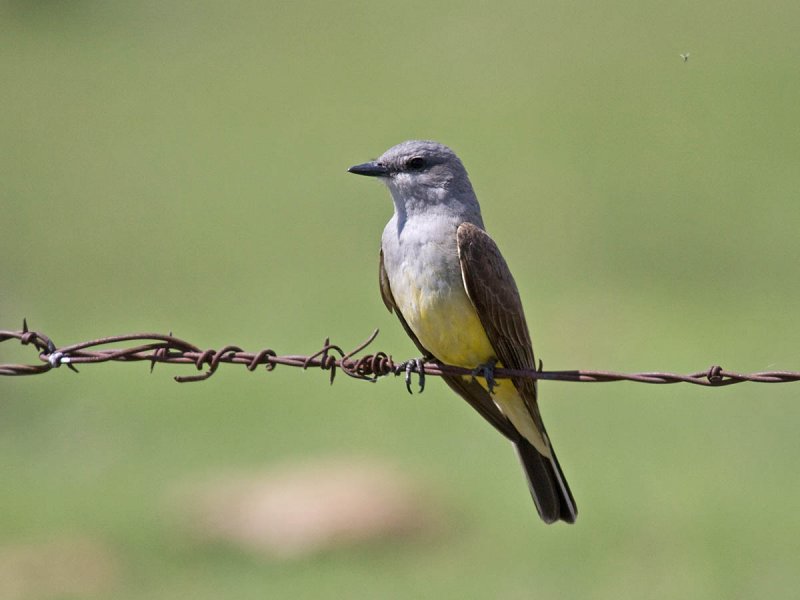 |
| Western Kingbird, Hines, Oregon May 24, 2009 by Greg Gillson. |
Swimming Waterbirds
Flying Waterbirds
Wading Waterbirds
Chicken-like Birds
Raptors
Miscellaneous Landbirds
Aerial Landbirds
Flycatcher-like Birds
Thrush-like Songbirds
Chickadee and Wren-like Songbirds
Warbler-like Songbirds
Sparrow and Finch-like Songbirds
Blackbird-like Songbirds
A beginner should be able to quickly place a bird they see into one of these categories.
The tyrant flycatchers of the Americas are the largest family of birds in the world with over 400 species. They perch upright, have an ample tail, and a rather large head with wide, flat bill. They are mostly colored in greens, yellows, grays, and browns, the Vermilion Flycatcher being one notable exception. They often remain motionless for extended periods of times and then sally forth to snap up flying insects and return to the same or nearby perch.
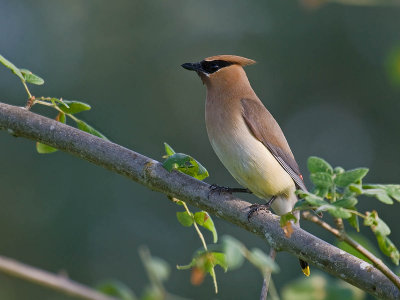
The Phainopepla of the Southwest deserts is blackish with a crest. Waxwings also are similar in general shape and behavior to flycatchers, also with a crest.

Thursday, November 1, 2012
Where should I go birding in November?
By November most of the summer visiting birds have migrated south to their wintering grounds. But the late fall sees an influx of waterfowl and raptors.
Additionally, some rare species can show up in November. I remember one November when a Scissor-tailed Flycatcher and Tricolored Heron--both Oregon rarities--were a few miles apart on the Oregon coast. There are often a few surprises to be found for those searching.
This is perhaps the time to clean your bird feeders and get them ready for winter feeding. That rain falling now may soon be snow!
Taking advantage of the influx of raptors there is at least one bird festival in the Pacific Northwest this November. Please let me know if there are others.
Where are you planning on watching birds in the coming month and what species do you hope to see there? Are you a field trip organizer? We want to hear what you offer (fee or free). Leave your response in the Comments section as ideas for others.
Birding Festivals:
Frasier Valley Bald Eagle Festival
November 17-18, 2012
Frasier Valley, BC
Additionally, some rare species can show up in November. I remember one November when a Scissor-tailed Flycatcher and Tricolored Heron--both Oregon rarities--were a few miles apart on the Oregon coast. There are often a few surprises to be found for those searching.
This is perhaps the time to clean your bird feeders and get them ready for winter feeding. That rain falling now may soon be snow!
Taking advantage of the influx of raptors there is at least one bird festival in the Pacific Northwest this November. Please let me know if there are others.
Where are you planning on watching birds in the coming month and what species do you hope to see there? Are you a field trip organizer? We want to hear what you offer (fee or free). Leave your response in the Comments section as ideas for others.
Birding Festivals:
Frasier Valley Bald Eagle Festival
November 17-18, 2012
Frasier Valley, BC
Thursday, October 11, 2012
eBird best practices
Don't be casual!
The most useful checklists to submit to eBird are complete checklists (every species detected is listed) and every species counted. If at all possible, you should accurately track observer effort--mileage and time. As you use eBird, more and more of your checklists will be as these.
The two main categories of effort-based lists are "Stationary" (you birded from a single location and didn't move more than 100 feet or so) and also a "Traveling" count. Traveling counts can be walked or driven (or both). Traveling counts are recommended to be 5 miles or less. If you change habitats, change to another checklist. On the other hand, if you are traveling through miles of identical habitat then it is not necessary to change checklists after 5 miles (think mono-species grasslands or pelagic trips). No eBird checklist should cross county borders. eBird Reviewers are instructed to weed out long trip lists that span county borders or multiple habitats. Thus, if you enter such lists the data will not be used in the maps and bar charts. But they will appear in your personal lists.
Sometimes, though, you see a noteworthy bird when you aren't birding. Or, you are entering sightings from years past--before you started eBirding--that lack effort information. This is the time to enter an "incidental" (renamed from "casual") list. You may or may not enter a complete list.
I've used incidental checklists when entering old year lists that listed only a new county bird for the year and location. I used an incidental list today. I was driving to a birding location and noted 35 Turkey Vultures on the way. I pulled over and used Bird Log to enter the exact location.
Some birders balk at creating multiple lists for one birding excursion, for instance, while doing a Christmas Bird Count or Migration Count or even a Big Day. However, when you think about it, you are really birding intensely at only a few discrete locations, and then you see a few other noteworthy birds en route that will be entered on individual incidental lists.
An old eBird article that uses the obsolete term "casual" observation is here:
http://ebird.org/content/ebird/news/are-you-really-making-casual-observations.
The two main categories of effort-based lists are "Stationary" (you birded from a single location and didn't move more than 100 feet or so) and also a "Traveling" count. Traveling counts can be walked or driven (or both). Traveling counts are recommended to be 5 miles or less. If you change habitats, change to another checklist. On the other hand, if you are traveling through miles of identical habitat then it is not necessary to change checklists after 5 miles (think mono-species grasslands or pelagic trips). No eBird checklist should cross county borders. eBird Reviewers are instructed to weed out long trip lists that span county borders or multiple habitats. Thus, if you enter such lists the data will not be used in the maps and bar charts. But they will appear in your personal lists.
Sometimes, though, you see a noteworthy bird when you aren't birding. Or, you are entering sightings from years past--before you started eBirding--that lack effort information. This is the time to enter an "incidental" (renamed from "casual") list. You may or may not enter a complete list.
I've used incidental checklists when entering old year lists that listed only a new county bird for the year and location. I used an incidental list today. I was driving to a birding location and noted 35 Turkey Vultures on the way. I pulled over and used Bird Log to enter the exact location.
Some birders balk at creating multiple lists for one birding excursion, for instance, while doing a Christmas Bird Count or Migration Count or even a Big Day. However, when you think about it, you are really birding intensely at only a few discrete locations, and then you see a few other noteworthy birds en route that will be entered on individual incidental lists.
An old eBird article that uses the obsolete term "casual" observation is here:
http://ebird.org/content/ebird/news/are-you-really-making-casual-observations.
Subscribe to:
Posts (Atom)