Friday, February 15, 2013

Bohemian Waxwings in juniper

Bohemian Waxwings, all photos at Enterprise, Oregon, February 2, 2013 by Greg Gillson.

In early February I visited Enterprise, Oregon, in the remote NE corner of the state. I saw several species of northern birds I hadn't seen in several years: Common Redpolls, Pine Grosbeaks, American Tree Sparrows, and Bohemian Waxwings.

The waxwings were in a group of about 150 birds, but often broke into smaller flocks of 50 or so, then reconverged. They seemed very flighty--they would fly into junipers in small groups to feed on berries until all 150 birds were present, then suddenly they would all dash off in a fright, to repeat the comeback in a few minutes. However, most of the 50 American Robins would stay in the trees feeding the entire time. Eventually the waxwings chose a low tree right along the road where our group could view and photograph them from inside the car at just 8-12 feet! We spent nearly an hour with this feeding flock of birds as they stripped the tree of its berries.

Bohemian Waxwing


There seemed to be no limit to the number of berries each bird ate. How they could still fly I do not know. The juniper berries are actually fleshy cones of this conifer. The alcoholic drink gin is flavored with these berries. Several central and northern European dishes are garnished with juniper berries.

Bohemian Waxwing

Like their southern cousins the Cedar Waxwings, Bohemian Waxwings are fawn brown with black mask, black throat, and wispy crest. In both species the blackish tail is terminated with a bright yellow band. Waxwings receive their name from the red waxy tips of some of the secondary wing feather shafts. Waxwings have a high-pitched buzzy call or trill, but no real song.

Waxwings feed on flying insects in the summer. It is not unusual to see groups of birds flycatching over a small stream or lake shore. In the fall they switch to berries and fruits as large as cherries.

Bohemian Waxwing

If the shape and flight style of Cedar Waxwings are like starlings, the larger and darker bellied Bohemian Waxwings are even more so.

Another waxwing, the Japanese Waxwing breeds in Russia and winters to Japan and Hong Kong. In appearance it seems half-way between Cedar Waxwing and Bohemian Waxwing with yellow belly and rosy under tail coverts.
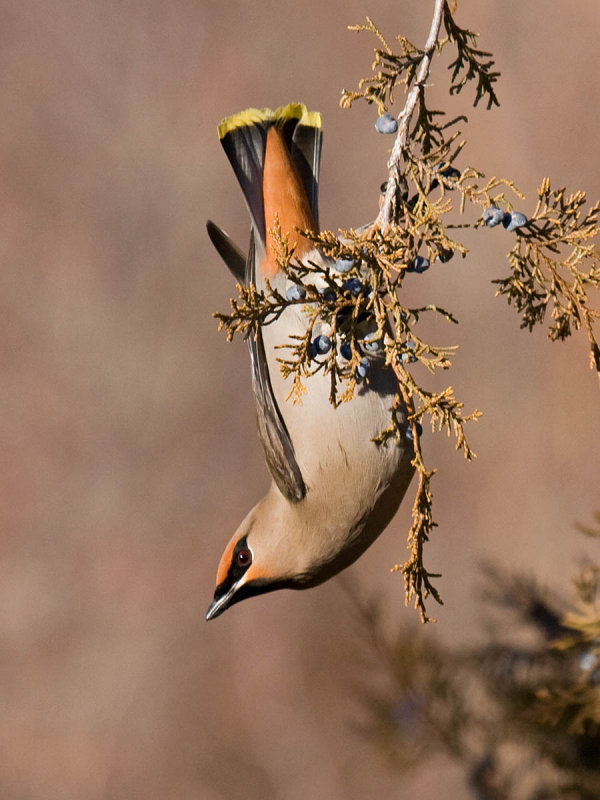
Bohemian Waxwing

If you want to know what undertail coverts are, there is likely no better example than the Bohemian Waxwing with its cinnamon-colored undertail coverts. In this species these coverts are extremely long, extending nearly to the end of this bird's quite long tail.

Bohemian Waxwings occur in Europe, Asia, and western North America. Locally, they breed from just below the Arctic Circle to central British Columbia. In winter they move south through Idaho and eastern Washington, and are regular in winter only in NE Oregon. However, keeping true to their Bohemian ("gypsy") name, they roam widely to the south in some winters, usually in flocks. Sometimes a single individual or two will join with a winter flock of Cedar Waxwings west of the Cascades.

Tuesday, February 12, 2013

American Wigeon

American Wigeon
American Wigeon at Commonwealth Park, Beaverton, Oregon on January 21, 2013 by Greg Gillson.

Your local city park with a pond may allow you better photos of ducks than a wild, isolated area. One recent day this winter the sun was shining brightly so I went to such a local city park. I didn't realize it at the time, but it wasn't a school day. Screaming kids, joggers, dog walkers, a few fishermen. It didn't matter. The wildlife here was well used to the hubbub. The only thing that disturbed them much was when an adult Bald Eagle flew over. Then the 5 Greater White-fronted Geese that have adopted this park for the winter chased the eagle off to the north, honking and bombing it. That's something I've never seen before!

This city park habitually holds 150-200 American Wigeon and is a great place to look for Eurasian Wigeon in winter. I've had up to 6 males and a female here at one time at this little park. Oddly, this winter Eurasian Wigeons have been hard to come by, and none were spotted this day.

Wigeon were briefly flushed to the lake by a passerby on a leash. This photo was taken as the birds flew back from the lake up onto the bank to graze on the lawn again. Click on the photo for a view of about double at 1200 pixels wide.

Sunday, February 10, 2013

eBird best practices: list building

eBird is designed to automatically show your lists (county, state, year, life, etc.) as you enter your bird sightings. In fact, even if you're not a lister, eBird could turn you into one--especially a county lister!

What about past sightings? Well, as we discussed in Enter your old field lists, you may enter older sightings and field lists, adding species to your lists that you may not have seen recently. The point comes, though, when you have entered all your old lists and some species are still missing that were never in your field notes, or you just have too many old lists to enter and you get tired of waiting, and you want to enter just your list of bird species ever seen, without entering every individual bird you've ever seen.

eBird is not designed (yet) just to enter bird lists without exact date and location. But I know that you will be tempted to enter your state or county life lists without knowing exactly where or when you saw the bird. In other words, you are going to "cheat" and enter a dummy field list.

Since I know you're going to do it, I'm going to tell you how... without messing up the data integrity of eBird.

 If you want to enter a life list for an entire state you can do so by submitting data in the entry called "Select an entire city, county, or state." If you enter only the state and country into the required fields your list should automatically be considered invalid because the location is too imprecise for eBird. There are two additional steps that you can take to flag these dummy lists. These steps must be done if you are submitting a dummy county list. Add a comment in the comments field that the list is a dummy for listing purposes. Change the date to January 1, 1900. That is the earliest date eBird accepts without special request.

If you do these three things an eBird reviewer will know to block the list data from eBird: 1. submit as a county or state only without a specific location, 2. add a comment that the checklist is for listing purposes only, and 3. make the date January 1, 1900. The birds in such a blocked list will not be added to eBird's abundance bar charts, but they will still show up in your personal lists.


Friday, February 8, 2013

Field-friendly bird sequence
Warbler-like Songbirds

MacGillivray's Warbler
MacGillivray's Warbler, Hayward, Oregon, May 16, 2008 by Greg Gillson.
The 13 categories of North American birds listed in the Field-friendly bird sequence: Part II are:

Swimming Waterbirds
Flying Waterbirds
Wading Waterbirds
Chicken-like Birds
Raptors
Miscellaneous Landbirds
Aerial Landbirds
Flycatcher-like Birds
Thrush-like Songbirds
Chickadee and Wren-like Songbirds
Warbler-like Songbirds
Sparrow and Finch-like Songbirds
Blackbird-like Songbirds

A beginner should be able to quickly place a bird they see into one of these categories.

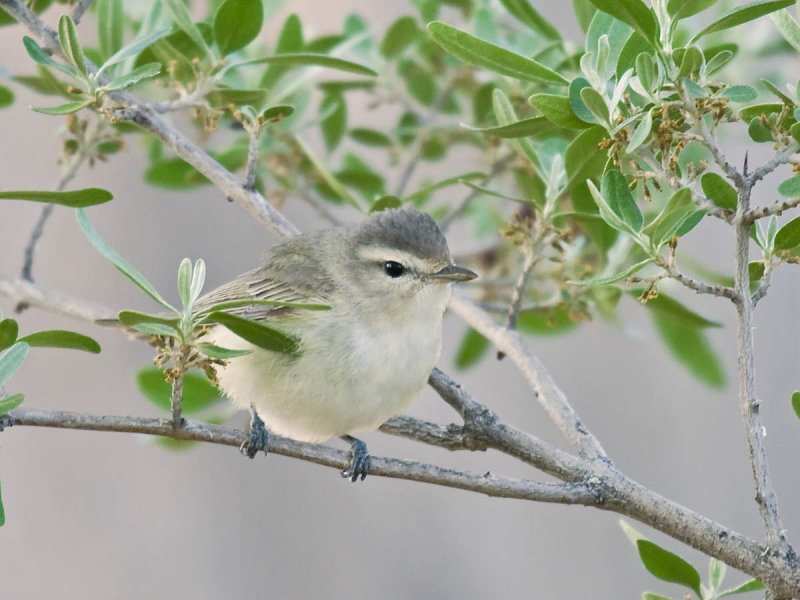
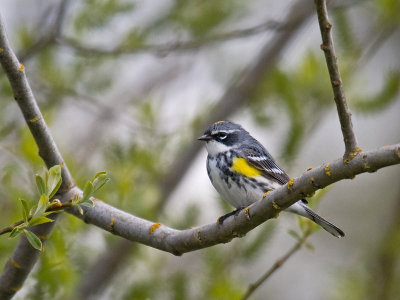
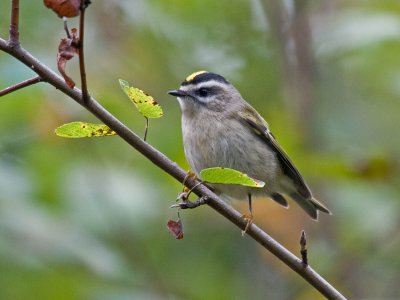
Kinglets, vireos, and warblers are included in this group of birds that are small with short thin bills. They are often found in trees seeking out insects. They are primarily colored in yellow, greens, black, gray, and white.

Warbling Vireo
Warbling Vireo, Malheur NWR, Oregon, May 25, 2009 by Greg Gillson.

Yellow-rumped (Myrtle) Warbler
Yellow-rumped (Myrtle) Warbler, Forest Grove, Oregon, April 29, 2011 by Greg Gillson.


Golden-crowned Kinglet
Golden-crowned Kinglet, Beaverton, Oregon, October 13, 2011 by Greg Gillson.

Tuesday, January 22, 2013

Song Sparrow or Fox Sparrow?

Rusty Song Sparrow ID
Song Sparrow ("Rusty" form), Beaverton, Oregon. 21 January, 2013 by Greg Gillson.
The following discussion pertains to separating the Rusty Song Sparrow found west of the Cascades in the Pacific Northwest from the Sooty Fox Sparrow, a wintering species that breeds in coastal Alaska and southward through western British Columbia, sparsely to the Olympic Peninsula of Washington.

This discussion is less apt for Song Sparrows east of the Cascades, and does not apply to summer breeding Fox Sparrows--Thick-billed Fox Sparrows in the Oregon Cascades and southward into SW Oregon and NW California, nor the Slate-colored Fox Sparrow of the Washington Cascades, Great Basin ranges, and Rocky Mountains. [See footnote.]

Both Song Sparrow and Fox Sparrow are found across the North American continent and are highly variable. Beginners are often confused by sparrows, in general. Even experienced visitors from out of the region are frequently confused, as our Song and Fox Sparrows look quite different from these species elsewhere.

The identification of sparrows requires paying special attention to and learning the names of the feather tracts on the head. [See "Advanced birding means learning the basics."]

Sooty Fox Sparrow ID
Fox Sparrow ("Sooty" form), Forest Grove, Oregon. 8 December 2007 by Greg Gillson.
These are the two darkest and rusty-brown colored streak-breasted sparrows in the Pacific Northwest. Here's a quick-glance way of separating them. The head of Song Sparrow (photo below) is gray with rusty brown stripes. The bill is dark gray. This is in contrast to the evenly chocolate brown head of Fox Sparrow (photo above) that only shows a hint of stripes, if any. The lower mandible is bright yellow, in contrast to the dark upper half of the bill. The Fox Sparrow is large with ample square tail, towhee-sized; the Song Sparrow is smaller with rounded tail.

There are other field marks, but the marks just mentioned are easy to remember to get you started.

Song Sparrow ("Rusty" form), Forest Grove, Oregon. 27 November 2008 by Greg Gillson.
For practice in naming the markings of the Song Sparrow's head above, we'll start at the top of the head and work down through the eye to the throat. Here goes. The very center of the crown has a thin gray stripe from the bill over the top of the head. See it? That's the median crown stripe. It goes right over the middle (median) of the crown. Next is a wide brown lateral crown stripe. Lateral is "on the side" and above the broad gray eyebrow stripe. Actually most of the face is gray. There is brown eyestripe through the eye back over the top of the ear coverts. The ear coverts (behind and below the eye) are gray, the lower border of the ear coverts is brown. That's the mustache line and it starts from the gape of the bill ("corner of the mouth"). The submustachial stripe ("below the mustache") is white. There is a broad flaring brown lateral throat stripe.The throat is white. These terms are illustrated in the introduction to most field guides.

Across the continent, despite large variations in darkness or paleness of plumage and overall size, all Song Sparrows have the same basic face pattern.

If you compare with the Fox Sparrow photo above, you'll see that you can't easily see any patterns that you can name. The whole head is rather dark gray brown. The crown (general top of the head) is more dark brown and the sides of the head are more gray. There is some white mixed with brown on the throat, and brown and white unpatterned streaks on the lower face and ear coverts. But, again, nothing that you could name with the clear facial markings terms like in the Song Sparrow.

Both sparrows are found in dense blackberry tangles and brush. The Song Sparrow also likes wetlands and marshes; the Fox Sparrow is more common in clearcuts in the foothills, but there is complete overlap. The Rusty Song Sparrows are resident west of Cascades, though other paler forms may occur in winter. Other, slightly paler and grayer Song Sparrows breed east of the Cascades. The main bulk of wintering Sooty Fox Sparrows in the Pacific Northwest arrive in October and remain until April.

Song Sparrows respond immediately and excitedly to pishing. [For more on pishing, see "The secret to my birding success."] They fly right up to you, out in the open, often responding with their squeaky "chimp" call note. They stay with you as long as you keep pishing. Fox Sparrows, on the other hand, take a bit more coaxing. They take a while to respond. However, if you whistle a pygmy owl imitation or imitate their harsh "check" call note they usually come out into the open to respond with the same call. Again, they tend to stay in the open once they finally respond.

[Footnote: The Thick-billed and Slate-colored Fox Sparrows that summer in the Pacific NW tend to have almost entirely pale gray heads with brown marks on the ear coverts. Their wings and tail are redder than the Sooty Fox Sparrows. They arrive in April and depart in September. Their call notes are a sharp metalic "chink," similar to White-crowned Sparrow or California Towhee. Thick-billed Fox Sparrows like ceanothus and manzanita scrub among regrowing pine seedlings 5-10 years after a clearcut. Slate-colored Fox Sparrows tend to be found in damp mountain seeps and creek bottoms. Song Sparrows east of the Cascades are paler gray and brown, but the head pattern is same as the Song Sparrow described above.]