You can embed photos, videos, and recordings of unusual or exciting birds to your checklists.
If you have a photo sharing website you can find the URL of your image and insert it directly as:
HTML code: <img src="http://your-photo-sharing-site/your-photo-name.jpg" />
If you use Flickr you can use the "share" function and copy the code.
Here are two things to remember:
1) Add the photo to the species comments section for each species (NOT checklist comments).
2) Use "medium" size (about 400x400 pixels).
3) Use no more than 2 photos per species.
Example eBird list with several photos embedded.
There are two pages on the eBird site that will provide more details.
http://ebird.org/content/ebird/news/embed-photos-in-your-checklists
http://help.ebird.org/customer/portal/articles/973966-adding-photos-videos-and-recordings-to-checklists
Tuesday, April 30, 2013
Thursday, April 25, 2013
Beginning Bird Identification
Back in January 2012 I discussed how birds that look alike aren't always placed in field guides next to each other (Field-friendly bird sequence: Part one). Instead, they are arranged by presumed relationships (taxonomic order)--and these constantly changing.
Next I looked at some previous attempts to organize birds by general external physical characters. I proposed a sequence that placed all North American birds into 13 categories (Field-friendly bird sequence: Part two). Beginners should be able to quickly place a bird they see into one of these categories, then search for the exact species more accurately than in field guides ordered in taxonomic sequence.
Over the subsequent year I discussed one of the 13 categories each month. It is now completed. I've gone back and updated Part two with links to each discussion. I repeat it below for your convenience.
Swimming Waterbirds
Flying Waterbirds
Wading Waterbirds
Chicken-like Birds
Raptors
Miscellaneous Landbirds
Aerial Landbirds
Flycatcher-like Birds
Thrush-like Songbirds
Chickadee and Wren-like Songbirds
Warbler-like Songbirds
Sparrow and Finch-like Songbirds
Blackbird-like Songbirds
What do you think? Do you find these categories useful for beginning birders?
Next I looked at some previous attempts to organize birds by general external physical characters. I proposed a sequence that placed all North American birds into 13 categories (Field-friendly bird sequence: Part two). Beginners should be able to quickly place a bird they see into one of these categories, then search for the exact species more accurately than in field guides ordered in taxonomic sequence.
Over the subsequent year I discussed one of the 13 categories each month. It is now completed. I've gone back and updated Part two with links to each discussion. I repeat it below for your convenience.
Swimming Waterbirds
Flying Waterbirds
Wading Waterbirds
Chicken-like Birds
Raptors
Miscellaneous Landbirds
Aerial Landbirds
Flycatcher-like Birds
Thrush-like Songbirds
Chickadee and Wren-like Songbirds
Warbler-like Songbirds
Sparrow and Finch-like Songbirds
Blackbird-like Songbirds
What do you think? Do you find these categories useful for beginning birders?


Friday, April 19, 2013
How to identify hawks and other raptors
Review: The Crossley ID Guide: Raptors
 |
| Photo from Princeton University Press. |
The Crossley ID Guide: Raptors (April 2013) is a 340 page book book covering the identification of 34 species of hawks, eagles, falcons, kites and other raptors found north of Mexico. As in the original Crossley guide, each page is like a museum panorama of dozens of bird photos backdropped by a photo of some well-known (often) North American scenic location. Most photo collages are 2-page spreads.
More than half the book is made of photo panoramic plates. The photos start with a couple of plates explaining the identification of each species and age. That is followed by a photo quiz plate! There are over 30 double-page plates of raptor quizzes, averaging more than 10 birds per quiz!
Whereas the original Crossley guide forsook text for photos, about a third of the book is textual species accounts written by raptor ID experts Jerry Ligouri and Brian Sullivan. Each species account begins with an interesting first-person introduction written from the perspective of the raptor itself--very unique! Subsequent sections in the species account include an overview, flight style, shape and size, plumage, geographic variation, molt, similar species, hybrids, status and distribution, migration, and vocalizations. Large 3-color maps show the breeding, resident, and winter ranges. The final 20 pages or so give the answers to the photo quizzes.
Three books in one!
- Annotated ID plates similar to the original Crossley ID Guide to birds.
- Expert in-depth species accounts covering status, distribution, and detailed plumage and flight style ID.
- Photo quizzes and answers.
For your convenience you can follow the link below to order this book from Amazon. And, yes, a very small percentage of the sale will go to me.
Tuesday, April 16, 2013
No Swainson's Thrushes before May!
All Swainson's Thrushes reported before April 28 in the Pacific Northwest are probably misidentified.
There. I said it. It may not be absolutely true, but true enough that if you think you saw one before May you better make doubly sure. In fact, it is possible that many Swainson's Thrushes reported before May 8 are in error, too.
In February I wrote a blog post for Birding is Fun! titled: Ten most-misidentified birds in the Pacific Northwest. The number one identification problem mentioned by a group of knowledgeable birders was the misidentification of Hermit Thrushes as Swainson's Thrushes.
Swainson's Thrushes vacate North America in late fall and do not come back until late spring. Nevertheless, numerous beginning birders every year report Swainson's Thrushes in April and even March. Hermit Thrushes are abundant early spring migrants and winter in good numbers in wooded areas west of the Cascades. Swainson's Thrushes nest in lowlands, Coast Range, and lower mountain slopes with deciduous or mixed woods. Hermit Thrushes in the Pacific NW nest in high elevation evergreen forests from the Cascade crest eastward (also in higher Olympic Mountains of Washington).
Take a look at the photos below. Do you see why many people have trouble telling these apart?
If you happen to have the National Geographic Field Guide to the Birds of North America, 6th Edition (2011), the Stokes Field Guide to the Birds of North America (2010), or the New Stokes Guide: Western region (2013) compare the Pacific coast (ustulatus) form of Swainson's Thrush and the western lowland (guttatus) form of Hermit Thrush. These are the two forms found most commonly west of the Cascades and look most alike.
Hermit Thrushes have slightly darker, rounder breast spots, and a reddish rump. Swainson's Thrushes have a pale supraloral area (the lores is the area between eye and bill, supraloral is above that). It makes the Swainson's Thrush look like it is wearing spectacles. Trouble is, this isn't that distinctive (see above photos). It doesn't help that these birds are shy and hide in the thick, shaded, understory shrubs.
East of the Cascades the subspecies look slightly less similar, but the Swainson's Thrushes east of the Cascades migrate even later in spring than those west of the Cascades.
Calls and songs are different. But Starlings and other birds can imitate the Swainson's Thrush's mellow whistled "whit" call. Hermit Thrushes give a blackbird-like chuck call.
Notice the eBird history for Willamette Valley, 1900-2013 (above). Only a very few Swainson's Thrushes show up the first week of May; most arrive later in May. Earlier reports are either exceptionally early birds or (probably) misidentifications.
Let's look at just the last 5 years for all of Oregon.
There are a couple of things to note here.
1) The reports in March and early April are probably misidentified. Even if some are correct, they make up less than 1% of checklist frequency. Consider it data "noise."
2) Ignoring the early noise, the first birds for the year didn't arrive until the first week of May in 4 of 5 years. In 2008, perhaps due to weather conditions, Swainson's Thrushes arrived in western Oregon some time during the fourth week of April (April 22-30th; see the label on the above graph).
3) Notice the peak frequencies in the fourth week of May (migration) and the third week of June (territorial singing). Then notice more detections as they migrate south in September and are heard by birders at night as they fly over calling "weet."
4) A single bird with injured wing photographed in Portland in December 2008. Healthy birds are highly unlikely in winter anywhere in North America.
So that's it. Question the correctness of your identification of Swainson's Thrushes before mid-May. Try to really study both these rather common woodland and forest birds this summer and learn their calls, songs, behavior, and habitat. It's always fun to be the first one on your block (I mean, listserv) to report the arrival of a new spring migrant. It's better, though, to actually be correct.
There. I said it. It may not be absolutely true, but true enough that if you think you saw one before May you better make doubly sure. In fact, it is possible that many Swainson's Thrushes reported before May 8 are in error, too.
In February I wrote a blog post for Birding is Fun! titled: Ten most-misidentified birds in the Pacific Northwest. The number one identification problem mentioned by a group of knowledgeable birders was the misidentification of Hermit Thrushes as Swainson's Thrushes.
Swainson's Thrushes vacate North America in late fall and do not come back until late spring. Nevertheless, numerous beginning birders every year report Swainson's Thrushes in April and even March. Hermit Thrushes are abundant early spring migrants and winter in good numbers in wooded areas west of the Cascades. Swainson's Thrushes nest in lowlands, Coast Range, and lower mountain slopes with deciduous or mixed woods. Hermit Thrushes in the Pacific NW nest in high elevation evergreen forests from the Cascade crest eastward (also in higher Olympic Mountains of Washington).
Take a look at the photos below. Do you see why many people have trouble telling these apart?
 |
| Swainson's Thrush. 28 June 2008. Timber, Oregon by Greg Gillson. |
 |
| Hermit Thrush. 17 December 2010. Hagg Lake, Oregon by Greg Gillson. |
Hermit Thrushes have slightly darker, rounder breast spots, and a reddish rump. Swainson's Thrushes have a pale supraloral area (the lores is the area between eye and bill, supraloral is above that). It makes the Swainson's Thrush look like it is wearing spectacles. Trouble is, this isn't that distinctive (see above photos). It doesn't help that these birds are shy and hide in the thick, shaded, understory shrubs.
East of the Cascades the subspecies look slightly less similar, but the Swainson's Thrushes east of the Cascades migrate even later in spring than those west of the Cascades.
Calls and songs are different. But Starlings and other birds can imitate the Swainson's Thrush's mellow whistled "whit" call. Hermit Thrushes give a blackbird-like chuck call.
 |
| Swainson's Thrushes reports in eBird for the Willamette Valley of western Oregon. |
Notice the eBird history for Willamette Valley, 1900-2013 (above). Only a very few Swainson's Thrushes show up the first week of May; most arrive later in May. Earlier reports are either exceptionally early birds or (probably) misidentifications.
Let's look at just the last 5 years for all of Oregon.
 |
| eBird graph of Swainson's Thrushes in Oregon, 2008-2012. |
1) The reports in March and early April are probably misidentified. Even if some are correct, they make up less than 1% of checklist frequency. Consider it data "noise."
2) Ignoring the early noise, the first birds for the year didn't arrive until the first week of May in 4 of 5 years. In 2008, perhaps due to weather conditions, Swainson's Thrushes arrived in western Oregon some time during the fourth week of April (April 22-30th; see the label on the above graph).
3) Notice the peak frequencies in the fourth week of May (migration) and the third week of June (territorial singing). Then notice more detections as they migrate south in September and are heard by birders at night as they fly over calling "weet."
4) A single bird with injured wing photographed in Portland in December 2008. Healthy birds are highly unlikely in winter anywhere in North America.
So that's it. Question the correctness of your identification of Swainson's Thrushes before mid-May. Try to really study both these rather common woodland and forest birds this summer and learn their calls, songs, behavior, and habitat. It's always fun to be the first one on your block (I mean, listserv) to report the arrival of a new spring migrant. It's better, though, to actually be correct.
Monday, April 15, 2013
Field-friendly bird sequence
Blackbird-like Songbirds
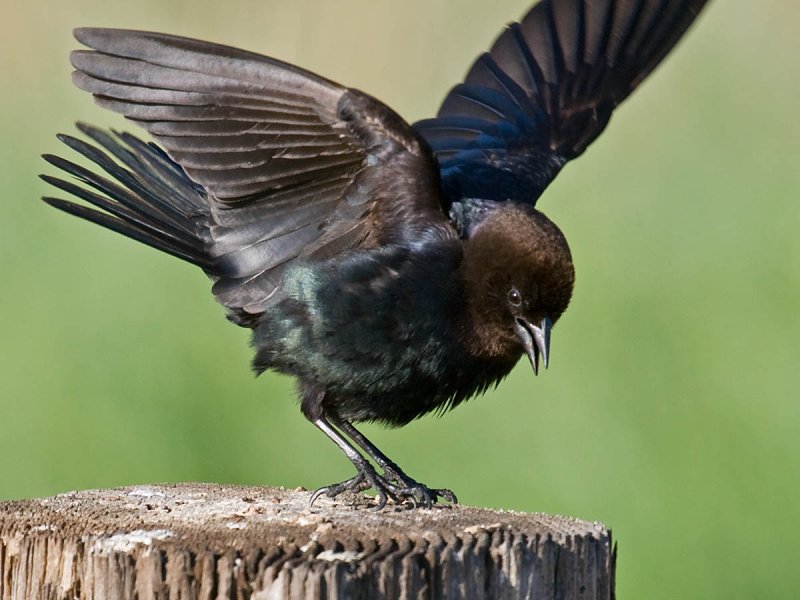 |
| Brown-headed Cowbird, Hines, Oregon, May 24, 2009 by Greg Gillson. |
Swimming Waterbirds
Flying Waterbirds
Wading Waterbirds
Chicken-like Birds
Raptors
Miscellaneous Landbirds
Aerial Landbirds
Flycatcher-like Birds
Thrush-like Songbirds
Chickadee and Wren-like Songbirds
Warbler-like Songbirds
Sparrow and Finch-like Songbirds
Blackbird-like Songbirds
A beginner should be able to quickly place a bird they see into one of these categories.
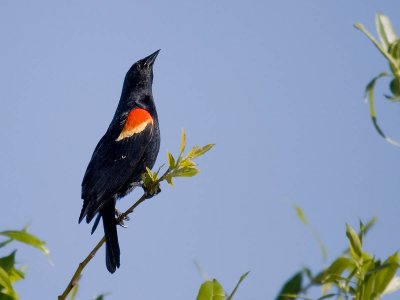
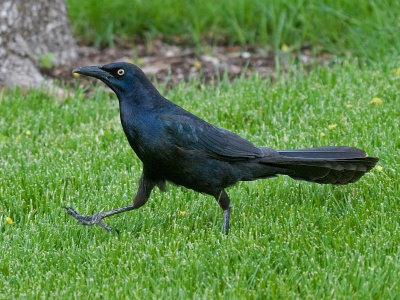
Smaller than crows, blackbirds, starlings, and cowbirds are primarily black in color.

Subscribe to:
Comments (Atom)